How to Visit Batu Caves
Batu Caves is a free, easy day trip from Kuala Lumpur. Learn the best time to visit, train tips, dress code, monkey warnings, and which caves are actually worth seeing.
The independent visit described here remains an option. A paid tour adds transport and a planned route.
Last updated: May 16, 2026
Quick Facts: Batu Caves At A Glance
Tap a column heading to sort.
| Location | Gombak, Selangor – 13 km north of Kuala Lumpur city centre |
| Opening Hours | Daily 7:00 AM – 9:00 PM (Temple Cave and complex) |
| Main Cave Entry | Free – Prices verified May 2026 |
| Ramayana Cave | RM 5 (~USD 1.10) – Prices verified May 2026 |
| Cave Villa | RM 15 foreigners / RM 7 Malaysians – Prices verified May 2026 |
| Dark Cave | Closed (no confirmed reopening date as of 2026) |
| Steps to Temple Cave | 272 steps |
| Train from KL Sentral | KTM Komuter, ~30 min, RM 2.60 one-way |
| Dress Code | Shoulders and knees covered; sarongs available at entrance |
| Thaipusam 2026 | February 1, 2026 – 3.5+ million visitors expected |
| Best Arrival Time | Before 8:00 AM on weekdays |
What Are Batu Caves And Why Do Travelers Keep Coming Back?
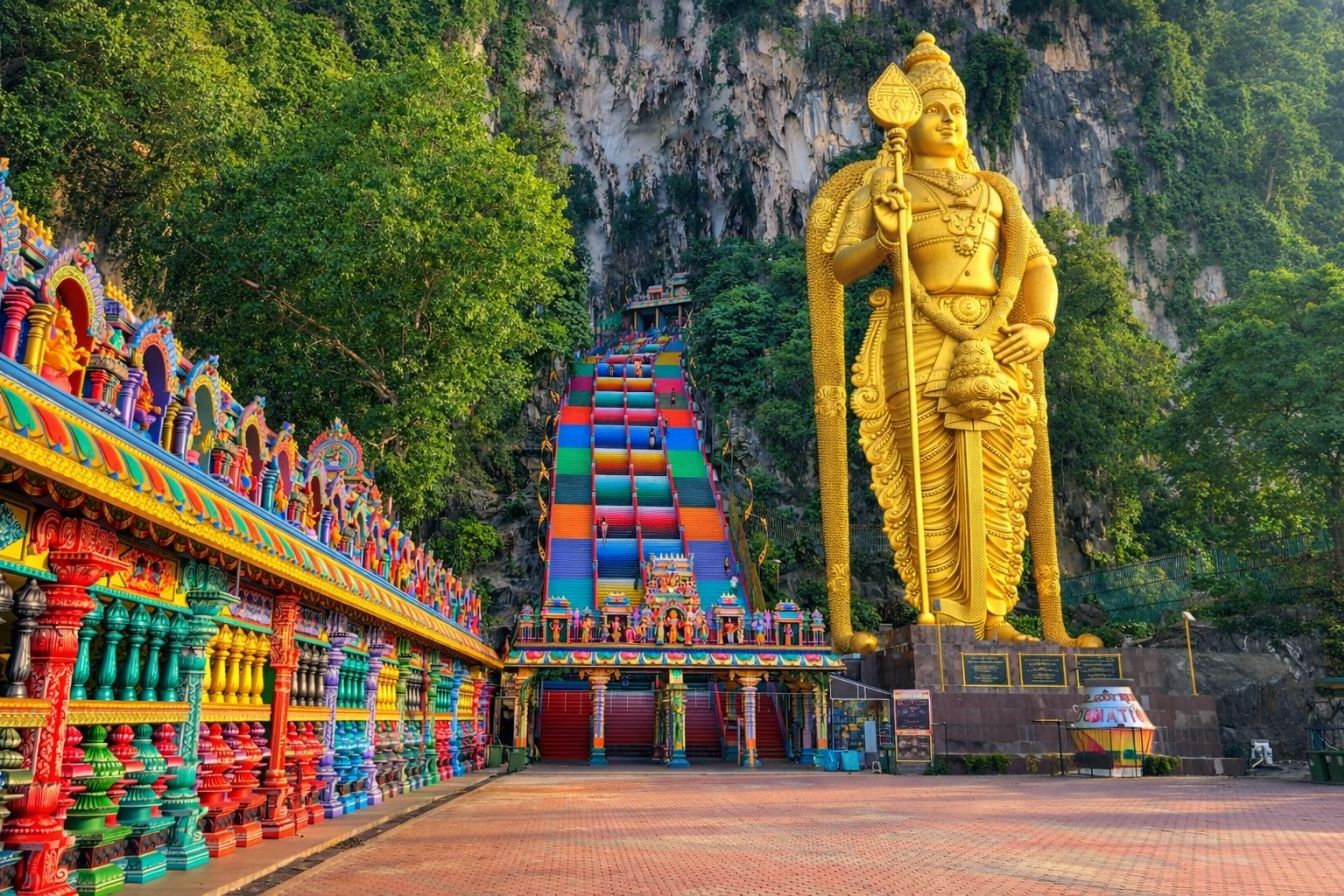 Batu Caves is a sacred Hindu temple complex built inside a 400-million-year-old limestone hill, 13 kilometres north of Kuala Lumpur. The site centres on a 42.7-metre golden statue of Lord Murugan, one of the tallest in the world, standing guard at the foot of 272 rainbow-coloured steps. Entry to the main cave is free. It is both an active place of worship and one of Southeast Asia’s most visited landmarks.
The first thing that hits you is scale. The golden statue is so large it reads as almost fake from a distance, the way something genuinely enormous sometimes does. Then you get closer and the staircase begins above you and it keeps going, 272 steps up into the mouth of a limestone cliff, and you realise the whole thing is real and ancient and somehow still in daily use by people who come here not for the photos but to pray.
The limestone itself is around 400 million years old. Longer than land vertebrates have existed. Tamil trader K. Thamboosamy Pillay built the first shrine inside the main cave in the 1890s, dedicating it to Lord Murugan. Since then, the site has grown into the most important Hindu pilgrimage site in Malaysia, and the largest outside of India. For festival season it draws millions. On a quiet Tuesday morning it draws pilgrims who climb barefoot, heads bowed, moving past the tourists with purpose.
That coexistence – sacred space and tourist attraction, ancient rock and painted rainbow stairs – is precisely what makes it worth the trip.
Not sure what 272 steps actually feels like in Malaysian heat and humidity before you commit to the climb? Here’s our Batu Caves stairs guide so you know exactly what you’re getting into.
How Do You Get To Batu Caves From Kuala Lumpur?
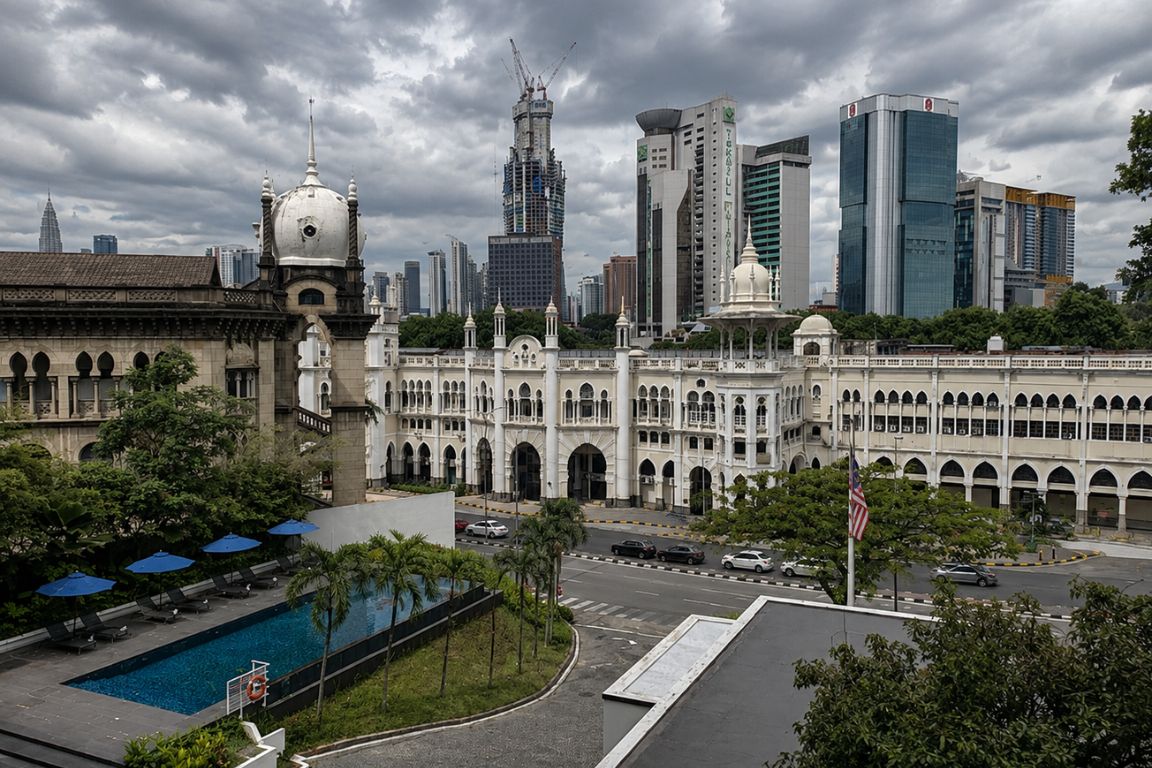 The fastest and cheapest way is the KTM Komuter train from KL Sentral. Direct trains run roughly every 30-60 minutes, the journey takes about 30 minutes, and the station exits practically at the base of the Lord Murugan statue. A one-way ticket costs RM 2.60 by cash or RM 2.30 with a Touch n Go card. No transfers needed.
On weekdays the first train from KL Sentral departs around 7:05 AM, making it perfectly timed for an early arrival before the crowds build. Trains run 21 times daily on weekdays, 17 times on weekends. Buy your token at the KTM ticket counter on Level 1 of KL Sentral’s Transit Concourse – they don’t sell advance tickets online. Cash or Touch n Go both work.
| Option | Time | Cost (approx.) | Best For |
|---|---|---|---|
| KTM Komuter (KL Sentral) | ~30 min | RM 2.60 | Most travelers – fastest, cheapest, drops you at the door |
| Grab (ride-hail) | 20-40 min | RM 20-35 | Small groups, early morning before trains run, limited mobility |
| Self-drive | 20-30 min | Fuel + RM 3 parking | Those combining with other stops; parking fills quickly on weekends |
| Guided tour from KL | Half-day | RM 43-120+ | First-timers wanting context, cultural depth, and logistics handled |
One practical note: if you’re coming from KLCC or Bukit Bintang, don’t overthink it. Take the LRT to KL Sentral, then switch to the KTM Komuter line heading toward Batu Caves. The whole connection takes less than 10 minutes once you know where the KTM counter is. Grab makes more sense if you have luggage, travelling with young children, or the thought of navigating two train systems sounds like too much before coffee.
On Thaipusam festival days, roads around the site are closed and traffic is a complete standstill. The train is the only sensible option, and during the 2025 and 2026 festivals it ran for free with extended hours.
Want to get to Batu Caves and back without the transport stress eating into your visit time? Here’s our how to get to Batu Caves from Kuala Lumpur guide so you travel smarter.
What Is The Best Time To Visit Batu Caves?
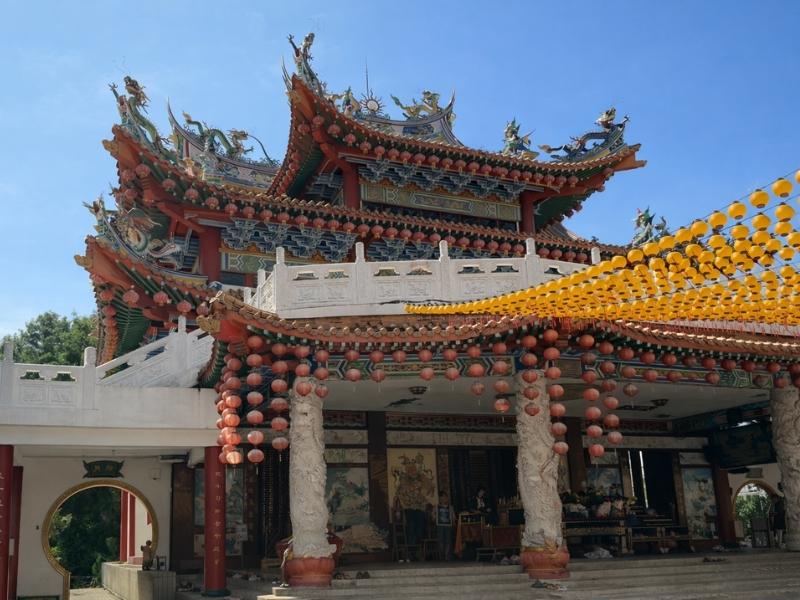
Arrive before 8:00 AM on a weekday. The staircase is quieter, the air is cooler, and the cave interior catches the early light through its ceiling gaps in a way that nothing in the afternoon replicates. By 9:30 AM the tour buses from KL begin arriving and the steps get congested. Weekends are significantly busier. Thaipusam (February 1, 2026) draws over 3.5 million visitors and is a completely different experience requiring its own preparation.
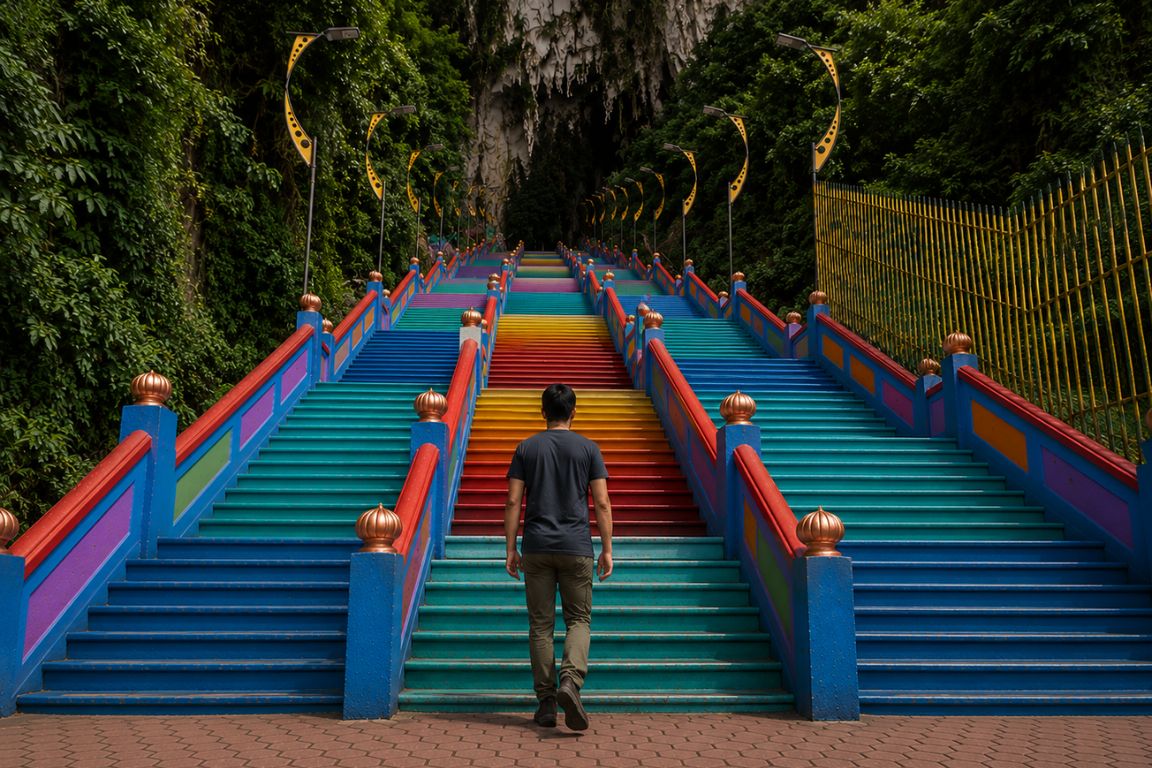
Malaysia’s tropical climate means the heat is serious business from mid-morning onward. The 272 steps face the sun and there’s no shade on the climb. Step 1 to step 80 feels manageable. By step 150 the humidity has found you. Arriving early is not just about avoiding crowds, it’s about avoiding a climb that feels twice as hard as it should.
Late afternoon, roughly 4:00 PM onward on weekdays, is also workable. The temperature drops slightly, the light becomes warmer, and many day-trippers have left. The cave itself catches a beautiful low-angle light through its ceiling openings around 5:00 PM. The trade-off is that the steps can be slick from afternoon rain, which falls unpredictably in KL’s wet season (March through April and October through November).
If your only option is a Saturday at noon, still go. But lower your expectations on personal space and budget more time.
What Should You Wear And Bring To Batu Caves?
 Cover your shoulders and knees – this is actively enforced at the base of the staircase by temple volunteers, not just a guideline. Sarongs are available to rent or buy at the entrance for around RM 5-15. Bring water (at least 500ml), wear closed shoes with grip, and leave food out of sight. What you carry matters as much as what you wear.
The dress code applies specifically to visitors climbing to the Temple Cave. At ground level, in the forecourt area or Ramayana Cave, casual clothing is fine. But if the staircase is your destination, cover up before you arrive – volunteers at the base will turn you back if you’re not dressed appropriately, and the sarong queue can eat 15 minutes of your morning.
Footwear deserves more attention than it gets. The cave floor at the top is uneven, often wet, and in some spots actively dripping from rain through ceiling gaps. Flip-flops on that surface coming back down 272 steps is how people fall. Wear something with grip. You’ll also need to remove your shoes when entering some of the ground-level temple areas, so sandals that slip on and off easily are more practical than laced trainers.
On what to bring: water is non-negotiable in the heat. Sunscreen for the staircase. A small, secure bag that zips shut – not because of pickpockets, but because of the monkeys. More on that shortly.
Not sure what to wear to an active Hindu shrine that sees thousands of tourists every day? Here’s our Batu Caves tours dress code guide so you don’t get turned away at the entrance.
How Much Does It Cost To Enter Batu Caves?
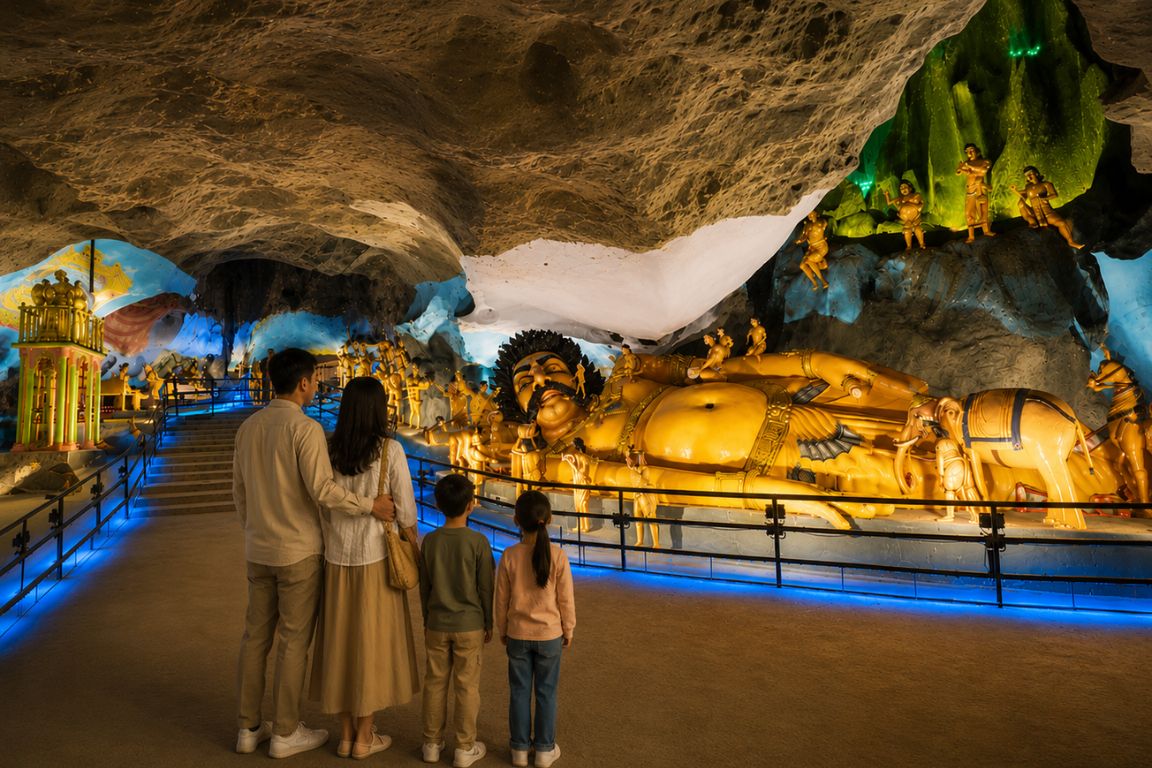 The main Temple Cave is completely free. The Ramayana Cave at ground level costs RM 5. The Cave Villa costs RM 15 for foreigners and RM 7 for Malaysians. The Dark Cave has been closed since 2019 with no confirmed reopening date. A full visit including the Ramayana Cave costs under RM 20 for most visitors. Prices verified May 2025.
There’s no ticket counter, no booking system, and no timed entry for the Temple Cave. You walk up, show covered shoulders and knees to the volunteers, and go. Optional donations are gratefully received by the temple, and given that this is one of the most visited free attractions in Southeast Asia, they’re worth considering.
The Ramayana Cave’s RM 5 entry is genuinely good value if you have the time, it’s calmer, cooler, and offers something different from the Temple Cave above. The Cave Villa is optional, and several travelers find it skippable. It’s a privately owned space with caged animals and reptiles, which some visitors find uncomfortable. Worth knowing before you pay.
We’ve put together a full pricing breakdown in our Batu Caves entry fee guide so you know exactly what to budget for, what’s included at each level, and how to avoid paying for things you don’t need.
Which Caves Can You Actually Visit At Batu Caves?
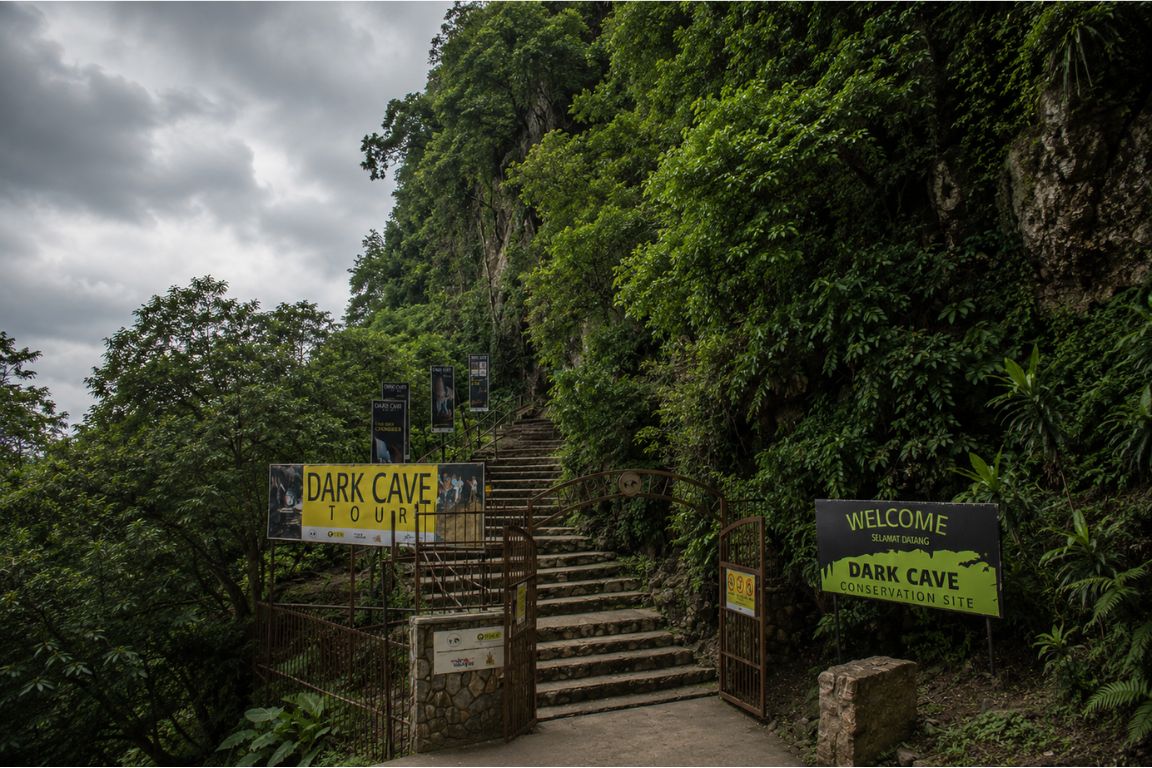 There are three accessible caves in the main complex right now. The Temple Cave (also called Cathedral Cave) sits at the top of the famous staircase and is the main event. The Ramayana Cave and Cave Villa are both at ground level. The Dark Cave, a protected nature reserve inside the hillside, has been closed since 2019 with no confirmed reopening. Each offers a different experience.
| Cave | Location | Entry Fee | What You’ll Find | Status |
|---|---|---|---|---|
| Temple Cave (Cathedral Cave) | Top of 272 steps | Free | 100m-high ceiling, active Hindu shrines, sunlight through rock gaps, monkeys | Open |
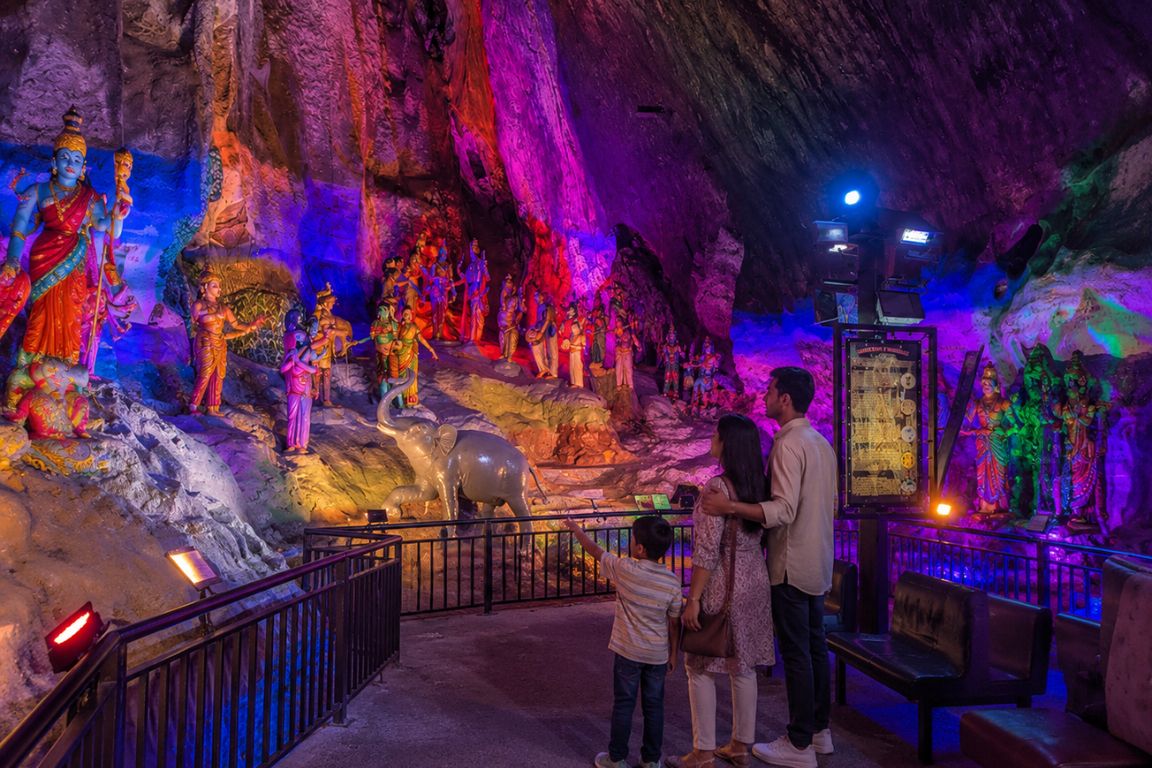
| Ramayana Cave | Ground level | RM 5 | LED-lit dioramas of the Ramayana epic, quieter atmosphere, narrative panels | Open |
| Cave Villa | Ground level | RM 15 / RM 7 | Privately owned; statues, shrines, koi pond bridge; caged animals on-site | Open (optional) |
| Dark Cave | Midpoint on staircase | RM 35 adult (when open) | Protected nature reserve; bats, rare spiders, stalactites, guided tours only | Closed since 2019 |
The Temple Cave is the reason most people make the climb, and rightly so. The ceiling is roughly 100 metres high at its peak, and the scale inside surprises almost everyone. It’s bigger than you expect. Active Hindu priests bless visitors who approach, and on busy days the sound of chanting fills the cave in a way that bounces off rock you can’t quite see above you. The Ramayana Cave is the one most travelers skip, and we think that’s a mistake. It takes 20-30 minutes, it’s almost always quieter than the main cave, and the illustrated dioramas of the Ramayana story are genuinely interesting if you approach them as what they are: sacred storytelling, not a theme park.
Wondering which caves and temple sections are worth the extra time and which ones most day-trippers run out of energy for? This what to see at Batu Caves tours guide covers what the standard visit consistently misses.
What Happens During Thaipusam At Batu Caves?
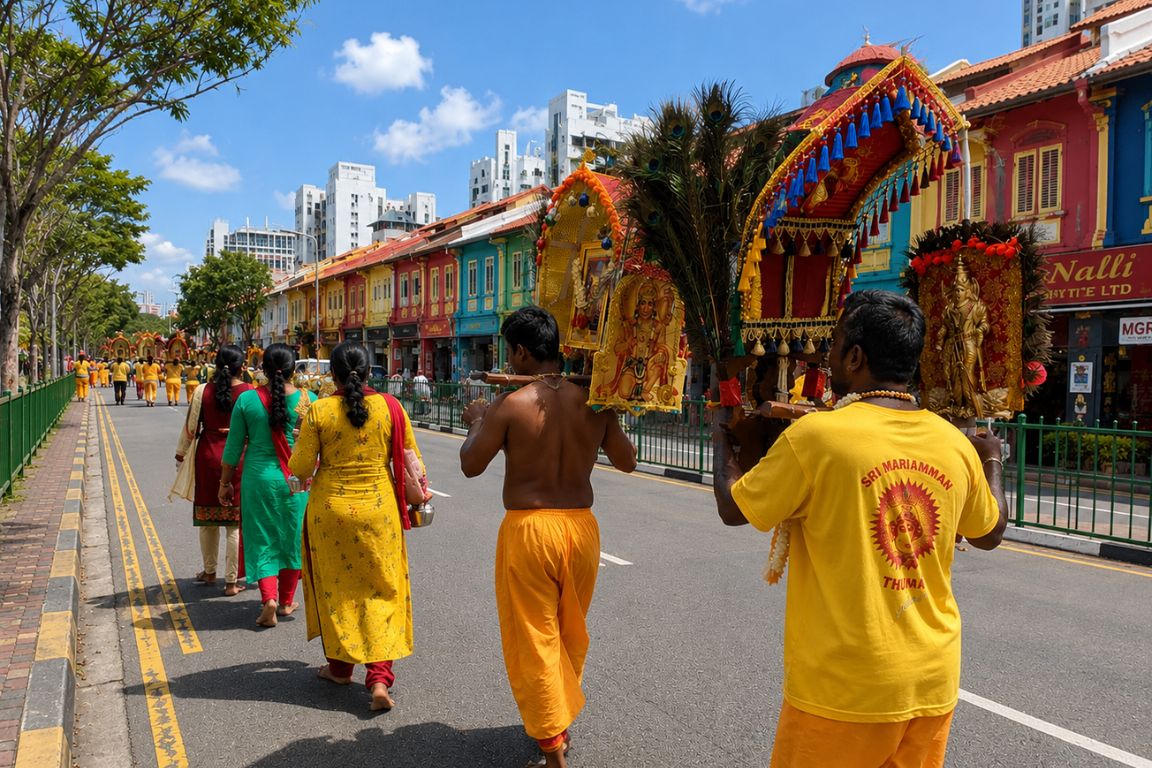 Thaipusam is a Tamil Hindu festival honouring Lord Murugan, celebrated during the full moon of the Tamil month of Thai, typically in January or February. At Batu Caves, it draws over 3.5 million visitors over the festival period. In 2026 the main day falls on February 1st. Devotees carry kavadis (ceremonial burdens, some involving body piercings) up the 272 steps as acts of penance and devotion. It is one of the most intense cultural events in Southeast Asia.
Numbers alone don’t capture it. The festival begins two days before the main event when a silver chariot carrying statues of Lord Murugan departs from Sri Maha Mariamman Temple in KL’s Chinatown, travelling 15 kilometres to Batu Caves in a procession accompanied by tens of thousands of devotees chanting and drumming through the night.
On the main day, the scene at the cave base is unlike anything in ordinary tourist travel. Devotees in saffron yellow and white move in an almost-continuous stream up the staircase, many barefoot, many in a state of deep religious concentration. Some carry kavadis, elaborate structures of metal and flowers, balanced by skewers pierced through their skin. It is not performance. It is devotion of a kind that most visitors from outside the tradition have genuinely never witnessed.
A few practical points for those attending: arrive before 7:00 AM if you want to climb the steps without being stuck in a human traffic jam. Wear yellow or orange if you want to blend in with the devotional crowd; avoid dark colours like black or navy, which are considered inauspicious during the festival. The KTM runs free with extended hours during Thaipusam and is the only sensible way to arrive. Roads within several kilometres of the site are closed or gridlocked. Don’t bring a car.
For non-Hindu visitors, the festival is fully open to attend and observe. Respectful curiosity is welcomed. Ask before photographing individuals engaged in personal devotional acts. Freely offered food from volunteer stalls is genuinely meant for everyone. Accept it.
Thaipusam at Batu Caves is unlike anything most visitors have experienced before and the logistics reflect that – our visiting Batu Caves tours during Thaipusam guide breaks down the crowd management, transport changes, and what to realistically expect on the day.
What Are The Monkeys At Batu Caves Actually Like?
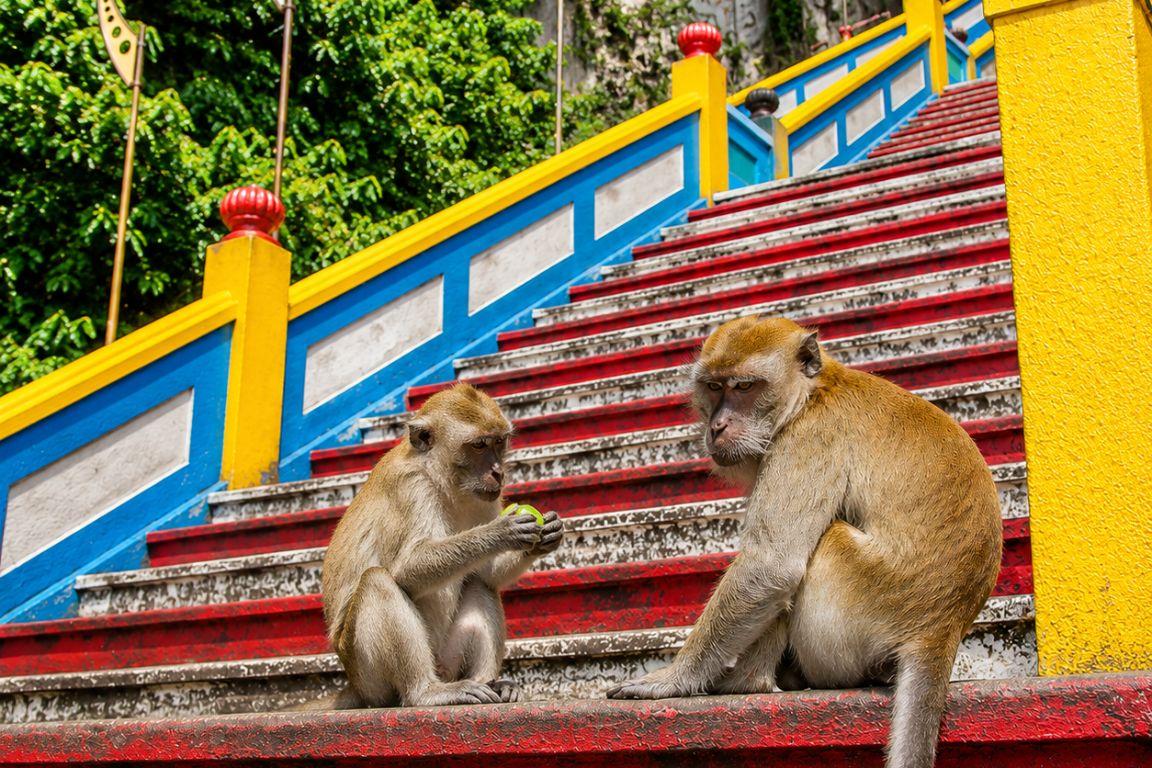 The long-tailed macaques at Batu Caves are wild animals that have spent years around tourists carrying food. They are confident, fast, and completely without hesitation. They will take food out of your hands, pull bottles from pockets, and go after bags with visible snacks. They are not dangerous if you don’t provoke them or carry food openly, but several visitors per year are scratched or bitten, usually after an unexpected encounter. Respect them. Don’t feed them.
Here is what actually happens: the monkeys don’t rush at you in an obvious way. They wait. They watch. They’ve seen a thousand tourists and they know which ones aren’t paying attention. The moment a water bottle goes into a side pocket, or someone pulls out a snack, or a bag opens, they move. Quickly and with complete confidence, the way an animal moves when it knows its environment better than you do.
Common targets are water bottles (especially plastic ones with visible liquid), sunglasses, shiny phone cases, and anything that smells like food. Glasses with neck straps are safer than glasses without. Cross-body bags kept zipped are safer than backpacks with open compartments. If a monkey approaches you, do not make direct eye contact, do not make sudden movements, and do not try to take something back by force. Let it have it. It isn’t worth a bite.
One pattern we see repeatedly with our groups: the worst monkey encounters involve food that comes out openly, usually mid-staircase. If you need to eat or drink, do it at the bottom before you start climbing. Once you’re on the steps, keep everything in a zipped bag and keep the bag in front of you. The monkeys that live on the upper staircase around steps 150-200 are particularly bold, because that’s where the tourist concentration peaks and where people stop to rest and reach into bags.
They are also, separately from all of this, genuinely fascinating to watch. A mother with an infant is something. The juveniles chasing each other across the staircase railing at absurd speed is something. Give them space and watch from a few metres back and they’re one of the more memorable parts of the visit.
Worried about the monkeys at Batu Caves and whether they’re actually as aggressive as people warn? Check out our monkeys at Batu Caves tours guide before your visit so you know what you’re dealing with.
Is Batu Caves Safe For Solo Travelers And Families With Kids?
 Yes, Batu Caves is safe for solo travelers and families. The site is well-staffed, the train connection is simple, and millions of people visit without incident each year. The main physical challenge is the staircase, which requires reasonable fitness and suitable footwear. Children of most ages can manage the climb. Visitors with mobility limitations should note there is no wheelchair access to the Temple Cave. The monkeys are the only consistent variable that needs managing.
Solo travelers, including solo women, move through Batu Caves without issue. The cave complex and train station are both busy and well-lit. The main practical consideration is timing: arriving before 9:00 AM and leaving before the mid-day heat peak makes the experience considerably more comfortable regardless of who you’re with.
For families with children, the staircase is the main conversation to have before you go. People in their 40s and 50s with average fitness manage the climb in 15-20 minutes. Most children above age 6 or 7 handle it without much trouble, especially going up. Coming down is where tired legs and wet stone steps become an issue, so hold hands and take it slowly on the descent. There’s no age restriction and no barrier at the bottom, so the decision is yours based on what you know about your child’s stamina.
The cave floor inside the Temple Cave is uneven and sometimes flooded in patches from rain seeping through the ceiling. Closed shoes, not sandals, for kids on the day.
Accessibility note: the site is not wheelchair-friendly for the Temple Cave. The staircase has no lift or ramp alternative. Ground-level areas, including the Ramayana Cave and forecourt, are generally navigable on flat surfaces, though uneven in places.
Bringing the family to Batu Caves and not sure whether the staircase climb and the monkey situation are manageable with young children? Here’s our Batu Caves tours with kids guide so you plan a visit everyone can handle.
What Do Most Visitors Miss At Batu Caves?
Most visitors see the staircase, climb it, photograph the interior, and leave. What they miss: the early morning light through the cave ceiling, the smaller ground-level temples active with real daily worship, the Ramayana Cave entirely, and the moment just before 8:00 AM when the cave sits almost quiet. The best experiences at Batu Caves are time-dependent, and most tourists arrive two hours too late.
The ceiling light is the thing. The Temple Cave has natural openings in the rock above, and in the early morning – from about 7:15 AM to 8:30 AM on clear days – sunlight drops through those gaps in narrow columns and hits the temple below. It doesn’t photograph exactly right. You have to be in it. Most visitors arrive after 9:30 AM when the light has moved and the cave is full and the moment is gone.
The ground-level temples are genuinely overlooked. Before the staircase, around the forecourt, there are several smaller temple structures where morning puja (prayer rituals) happen daily. Incense, flowers, chanting. Visitors who arrive early enough sometimes find themselves the only non-worshipper present. The priests often welcome quiet observers. Taking your shoes off and sitting for five minutes is not a tourist activity. It’s one of the better things you can do at a place like this.
The Ramayana Cave at RM 5 gets a fraction of the attention the main staircase gets, partly because it doesn’t photograph as dramatically. It’s a quieter, stranger, more contemplative space. The LED-lit dioramas are not everyone’s aesthetic, but the narrative they tell – the Hindu epic of Rama, Sita, Hanuman – is one of the great stories of the ancient world, and having it explained in physical form in a limestone cave in Malaysia is a specific experience you won’t find anywhere else.
Last thing. The descent matters. Most people rush down the steps because they’re tired or hot or the tour bus is waiting. Walk slowly. Look back at the city through the frame the limestone makes on the way down. There’s a view from about step 180, looking out over the forecourt with the golden statue far below, that appears on very few people’s camera rolls because they’re usually staring at the next step. Don’t miss it.
What Our Travelers Actually Experience: 2025 Client Data
| Observation | From Our Guided Groups (2025) |
|---|---|
| Arrived before 8:30 AM and reported low crowds on staircase | 82% of groups |
| Had a monkey interaction (snatch attempt or approach) | 64% of travelers |
| Visited Ramayana Cave in addition to Temple Cave | 45% of groups |
| Arrived underdressed and needed a sarong at the entrance | 38% of travelers |
| Rated the Temple Cave interior as “exceeded expectations” | 91% of travelers |
| Total travelers guided through Batu Caves since founding | 6,500+ (active since 2015) |
Frequently Asked Questions
Is there an entry fee for Batu Caves?
The main Temple Cave is free to enter. The Ramayana Cave costs RM 5, the Cave Villa costs RM 15 for foreigners, and the Dark Cave (currently closed) was RM 35 when open. Most visitors pay nothing. Prices verified May 2025.
How long does a visit to Batu Caves take?
The Temple Cave alone, including the staircase climb, takes 45-75 minutes. Adding the Ramayana Cave at ground level brings the total to around 2 hours. A multi-stop tour may allocate less time here; compare the published itinerary before booking.
Can you visit Batu Caves without a guide?
Yes. Entry is free and unguided. Most visitors navigate the site independently. The trade-off is context – the Temple Cave contains active Hindu shrines and artworks that are considerably more meaningful with someone explaining what you’re looking at. Ground-level maps and information boards are available at the site.
What is the best way to get to Batu Caves?
The KTM Komuter train from KL Sentral is the most practical option for most visitors. It runs directly to Batu Caves station, which is about 80 metres from the entrance. The journey takes around 30 minutes and costs RM 2.60 one-way. Grab is a good alternative for early morning visits or small groups who want door-to-door convenience.
Are the monkeys at Batu Caves dangerous?
They are wild animals and should be treated accordingly. Most encounters are opportunistic food-snatching rather than aggression. Don’t carry food openly, keep bags zipped, and don’t feed them. Bites and scratches happen but are avoidable with basic awareness. If you are bitten, seek medical attention immediately for a tetanus check.
Is Batu Caves worth visiting during Thaipusam?
It depends on what you want. For a once-in-a-lifetime cultural experience, yes. Thaipusam at Batu Caves is one of the most intense and visually extraordinary events in Southeast Asia. For a relaxed sightseeing visit, no. Come in the early morning on a weekday instead. Both are genuinely worthwhile, but they are completely different experiences.
Choose Your Batu Caves Day
Private Batu Caves & KL Cultural Tour. A private vehicle connects Batu Caves, Thean Hou Temple and the National Mosque, with independent time at the stops. Have a date in mind? Check it before arranging the rest of your KL day.
4 hours. English-speaking driver/guide. KL city hotel pickup and return; airport and Port Klang pickup cost extra. Food is extra. Mosque interior unavailable on Fridays. The Temple Cave requires stairs; this is not an accessible or festival-specific tour.
Choose a date to see scheduled departures. Final availability and price are confirmed on Viator.
No verified tour fits those requirements. Adjust your choices, or keep the independent plan described above. A festival, accessible route or another endpoint needs a separately confirmed service.
Compare Options And Fit Your Plans
General recommendations until you choose. English driver guidance does not promise an escort on the staircase. Confirm the exact pickup, child arrangements and site time on the listing.
- Private Batu Caves & KL Cultural Tour: 4 hours. A private vehicle connects Batu Caves, Thean Hou Temple and the National Mosque, with independent time at the stops. English-speaking driver/guide. KL city hotel pickup and return; airport and Port Klang pickup cost extra. Food is extra. Mosque interior unavailable on Fridays. The Temple Cave requires stairs; this is not an accessible or festival-specific tour.
- Batu Caves, Ramayana & Kanching Falls: 5 hours. Combine the Temple Cave with the Ramayana Cave story scenes and a Kanching waterfall stop. Five hours. English-speaking driver-assisted tour. Ramayana and Kanching admission included. Pickup depends on option. Not suitable for pregnancy or mobility impairments; child eligibility must be confirmed on the listing. Food and personal expenses are extra.