Batu Caves Entry Fee
Batu Caves is mostly free to visit. Here’s what actually costs money, which caves require tickets, and why you should ignore “entry ticket” websites.
The independent visit described here remains an option. A paid tour adds transport and a planned route.
Last updated: May 16, 2026
Batu Caves Entry Fees: Complete Price List
Tap a column heading to sort.
| Temple Cave (main cave) | Free | Free | Open daily 7:00 AM – 9:00 PM |
| Lord Murugan Statue and forecourt | Free | Free | Open, no restrictions |
| Ramayana Cave | RM 5 | RM 5 | Open 9:00 AM – 6:00 PM |
| Cave Villa | RM 15 | RM 7 | Open 8:30 AM – 5:30 PM |
| Dark Cave | RM 35 adult (when open) | RM 35 adult (when open) | Closed since January 2019 – no reopening date |
| Temple donations | Voluntary | Voluntary | Donation boxes throughout the complex |
| Thaipusam (all caves) | Free | Free | No change to entry pricing during festival |
Prices verified May 2026
Is Batu Caves Free To Enter?
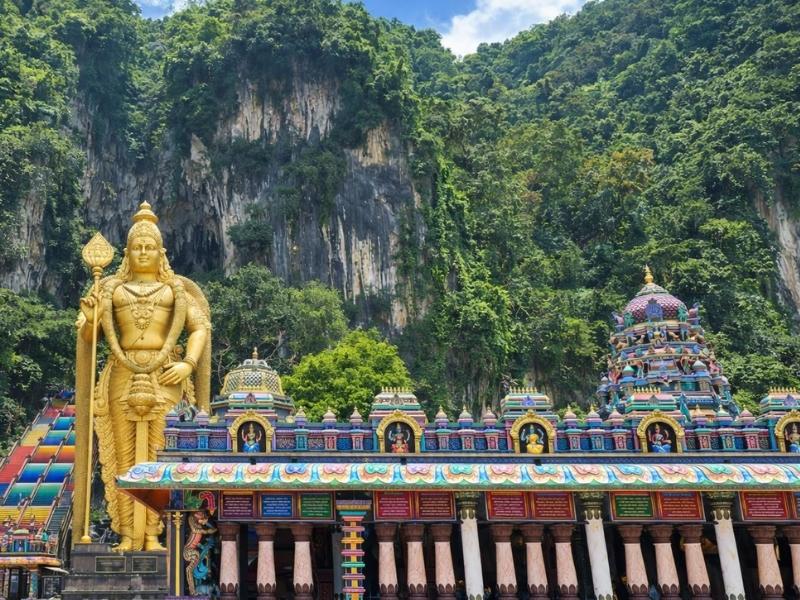
Yes. The main Temple Cave, the 272-step staircase, the Lord Murugan statue, and the entire forecourt area are completely free. No ticket is required, no booking is needed, and there is no entry gate. You walk from the train station, cross the forecourt, and climb. The only thing standing between you and the Temple Cave is the dress code check at the base of the stairs, and a sarong at RM 15 solves that if needed.
This often surprises visitors, particularly those who’ve searched for “Batu Caves tickets” and found third-party booking platforms selling “entry” for RM 40-150. Those are tour packages – transport, guide, and sometimes other KL attractions bundled together. None of them give you access that you don’t already have for free. The main cave has been free to enter since the first shrine was built there in 1891. That hasn’t changed.
The free entry covers considerably more than most free attractions offer. The forecourt includes the 42.7-metre golden Lord Murugan statue, several active Hindu temples with daily rituals, the base of the rainbow staircase, and the entire public ground-level space. The Temple Cave at the top contains a 100-metre limestone ceiling, active shrines with priest-led ceremonies, natural skylights through the rock, swiftlets flying overhead, and more. All of it, free.
Donations are welcomed and genuinely appreciated. Donation boxes are placed throughout the Temple Cave and at the ground-level shrines. The temple runs on the generosity of devotees and visitors and receives no government operating subsidy. If you’ve had a meaningful experience, RM 5-20 in the donation box is a reasonable reflection of that. It isn’t expected or enforced, but it matters.
Not sure what Batu Caves actually has beyond the golden Murugan statue and the famous staircase? Here’s our what to see at Batu Caves tours guide so you arrive knowing where to look.
How Much Does The Ramayana Cave Cost?
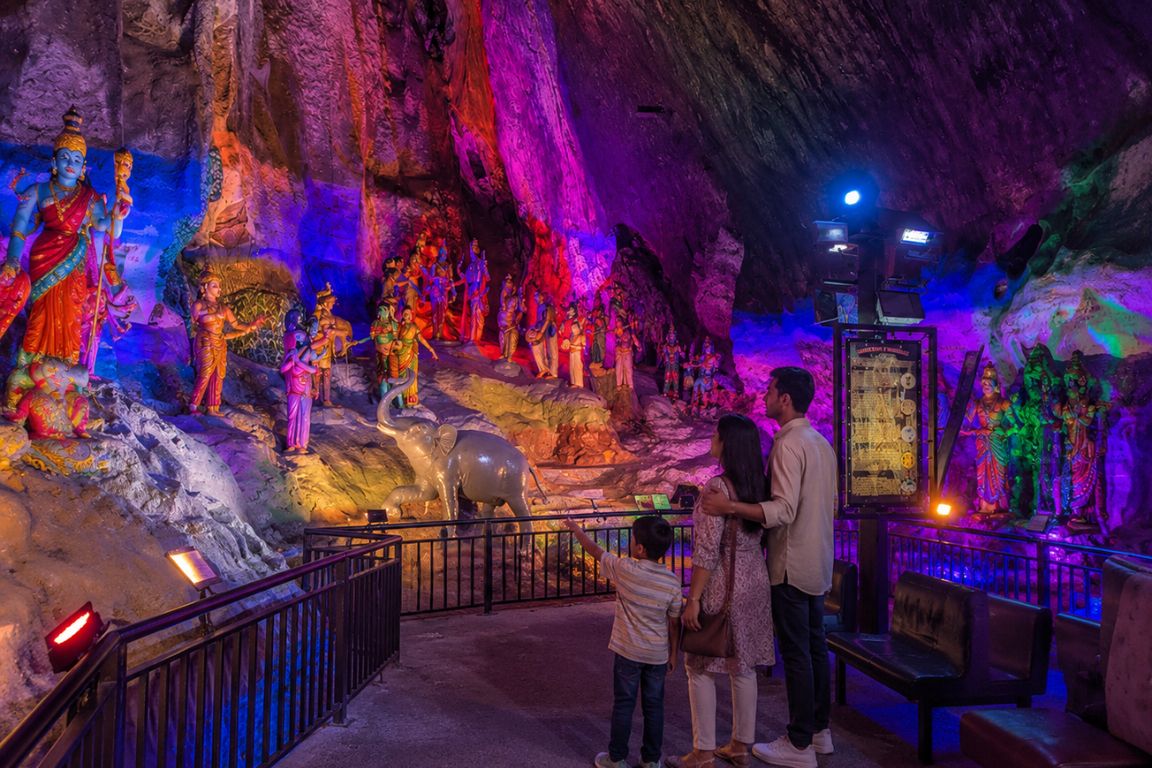
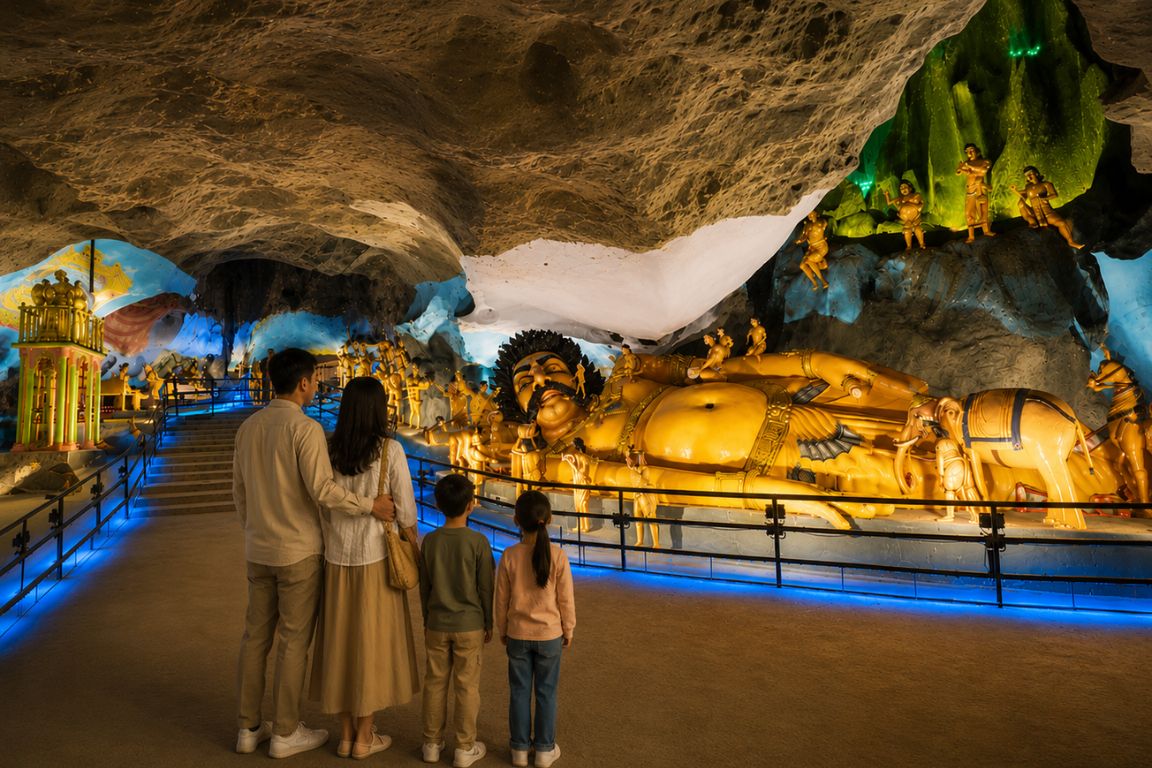 Entry to the Ramayana Cave costs RM 5 per person for all visitors – there is no separate Malaysian rate. The cave is open from 9:00 AM to 6:00 PM daily. You pay at a small counter near the cave entrance, which is located to the left of the main staircase behind the 15-metre Hanuman statue. Cash only. The RM 5 covers the full visit with no time limit. Prices verified May 2026.
The RM 5 entry is genuinely good value by any measure. The Ramayana Cave takes 20-30 minutes to walk through and tells the story of the Hindu epic through illuminated dioramas along the cave walls. It’s consistently quieter than the Temple Cave above – many visitors skip it because it has a fee while the main cave is free, which creates an accidental advantage for those who pay. You rarely have to wait at the entrance, the cave temperature is cool, and the narrative panels in English make the dioramas accessible to visitors with no prior knowledge of the Ramayana.
One practical note: the Ramayana Cave opens at 9:00 AM, later than the Temple Cave above. If you arrive at 7:00-8:00 AM for the early-morning quiet period, the Ramayana Cave will not yet be open. Plan the visit as a second stop after the Temple Cave climb if your schedule includes both.
There is no dress code enforcement at the Ramayana Cave entrance. Visitors in casual clothing – shorts, sleeveless tops – can enter without needing to cover up. The dress code applies specifically to the staircase and Temple Cave. This makes the Ramayana Cave a practical option for visitors with limited mobility who can’t manage the staircase and want to experience at least one of the cave interiors.
Want to tackle the Batu Caves staircase without the rookie mistakes that slow most first-timers down? Here’s our Batu Caves stairs guide so you reach the top without regret.
How Much Does The Cave Villa Cost?
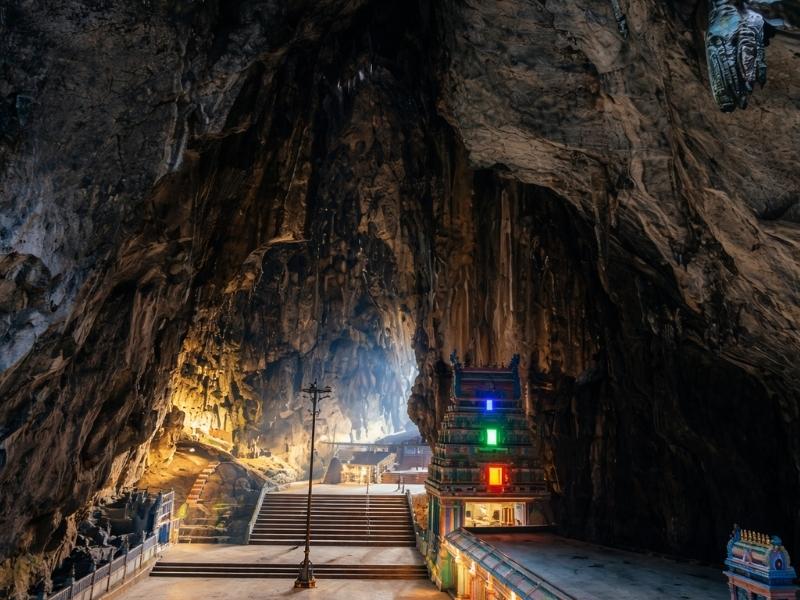
The Cave Villa costs RM 15 for foreigners and RM 7 for Malaysian citizens who present their MyKad. It is open from 8:30 AM to 5:30 PM daily. The cave is privately owned and contains Hindu art, statues, a koi pond, and two smaller cave galleries. It also houses caged animals including reptiles and birds, which some visitors find uncomfortable. This is not disclosed before you purchase your ticket. Prices verified May 2026.
The Cave Villa is the most optional of the three paid attractions at Batu Caves, and the most divisive. The statues and art inside are interesting, and the koi pond and raised walkway create a different atmosphere from the main cave above. But the animal enclosure – reptiles and small mammals in cramped conditions – is something multiple visitors have flagged in reviews and travel publications as unexpectedly distressing, especially for families with children who notice it before adults can redirect attention.
If you are visiting with children who are comfortable with caged animals, or if Hindu art and mythology exhibits are your primary interest, the RM 15 is reasonable. If your visit is mainly the staircase and Temple Cave, and you have limited time or limited appetite for the animal welfare question, the Cave Villa is safely skipped. The Ramayana Cave at RM 5 offers more culturally coherent content for a third of the price.
Malaysian citizens pay only RM 7 with MyKad. For a Malaysian family of four, the differential is meaningful – RM 28 rather than RM 60. There’s no student or child discount published for foreign visitors at the time of writing.
A family visit to Batu Caves needs different planning than a solo or couples trip – our Batu Caves tours with kids guide breaks down the age considerations, monkey precautions, and which cave sections are actually engaging for younger visitors.
What Was The Dark Cave Entry Fee?
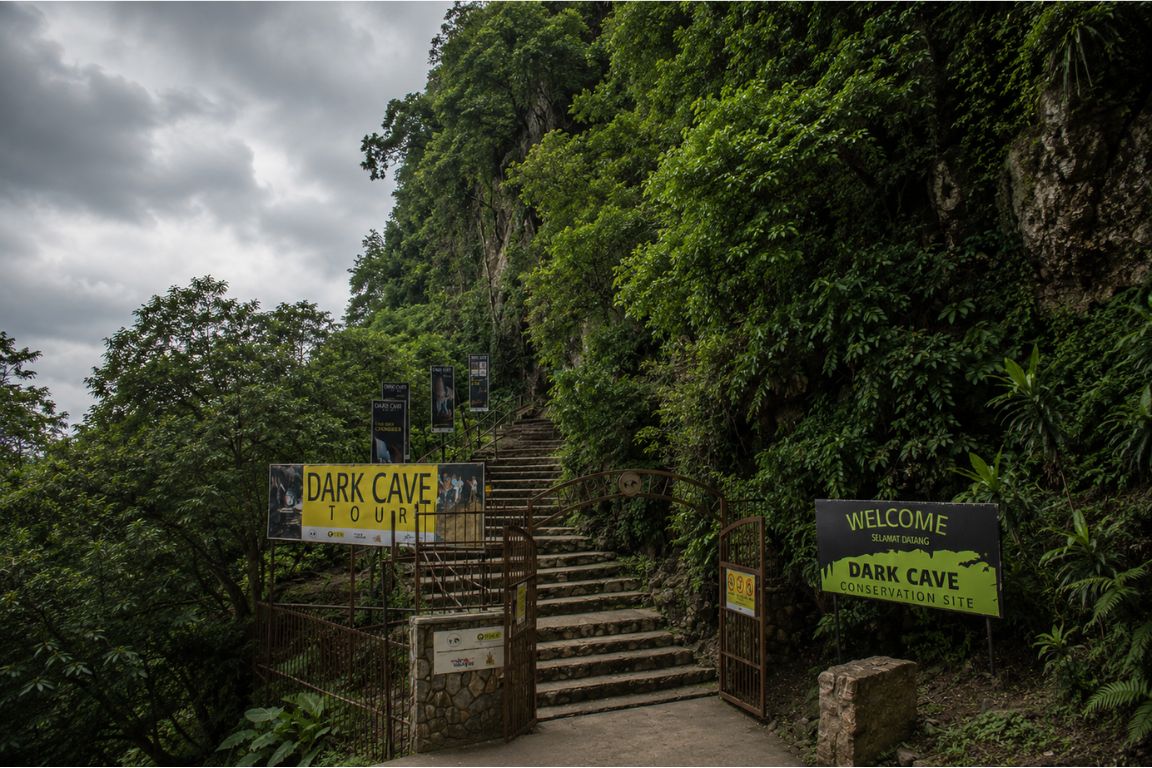 Before its closure in January 2019, the Dark Cave charged RM 35 for adults and RM 25 for children for the 45-minute educational tour. A more extensive adventure tour lasting three to four hours cost RM 100-120 per person. Both tours were guide-only – self-entry was never permitted. The Dark Cave has been closed since early 2019 with no confirmed reopening date. Any pricing information online from before 2019 is no longer applicable.
The Dark Cave was managed by the Malaysian Nature Society and protected under conservation regulations as a significant biodiversity site. Its 21 bat species, the endemic trapdoor spider Liphistius batuensis, and two kilometres of mapped limestone passages made it one of the more scientifically significant cave systems open to the public in Southeast Asia. The guided tour model was deliberately limited – group sizes were small, visit frequency was controlled, and the proceeds went toward conservation rather than commercial development.
The closure was triggered by safety and conservation concerns and was never intended to be permanent. Various initiatives – including discussion within the Visit Selangor Year 2025 programme – have explored reopening, but as of May 2026 no official reopening date or updated fee structure has been confirmed. The Malaysian Nature Society’s website at darkcavemalaysia.com is the authoritative source for any future announcement. Don’t book tours or check prices from pre-2019 sources – all that information is outdated.
What Are The Hidden Costs At Batu Caves?
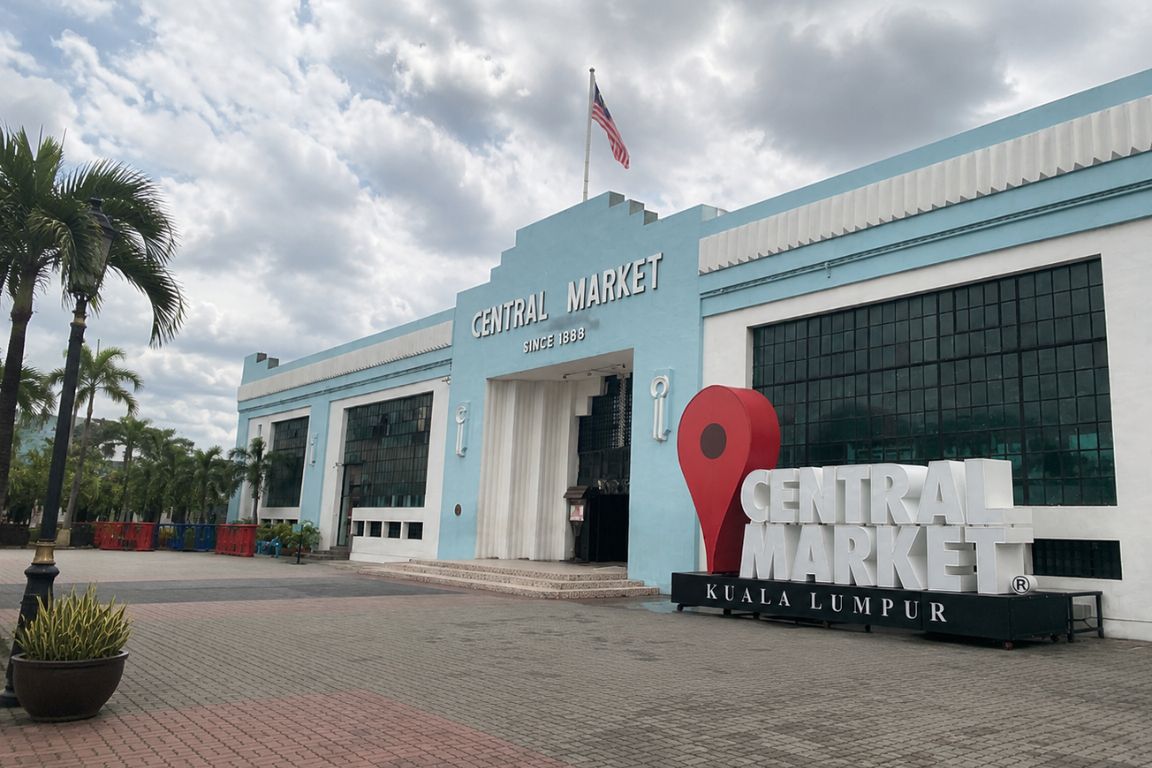 Beyond the cave entry fees, five real costs catch visitors off guard: the sarong purchase (RM 15 if you arrive underdressed), public toilets (RM 0.50-2), parking (RM 3 by car), voluntary ceremony participation (RM 10-50 donation if you accept a blessing), and food and drinks from vendors inside the complex. None are mandatory, but all are cash-only. Arriving with RM 50-100 in small denominations covers most scenarios.
The sarong is the most common surprise. Visitors who arrive in shorts or sleeveless clothing are redirected to the sarong counter at the base of the staircase and pay RM 15 to purchase one – the sarong sale replaced what was previously a rental service. This is avoidable entirely by dressing to the dress code before arriving. A lightweight scarf or sarong bought at Petaling Street or Pasar Seni for RM 5-10 serves the same purpose and travels in a day bag without taking up meaningful space.
Public toilets are located at the train station exit (RM 0.30-0.50), near the forecourt, and at the base of the commercial area. The station toilet is typically clean and well-maintained. There’s no toilet paper provided at most facilities, so bringing your own or having tissues in your bag is practical. All toilet transactions are cash.
Parking, if you’re driving, costs approximately RM 3 per vehicle in the main lot near the complex entrance. There’s no time limit on the ticket, but the lot fills quickly on weekends from around 9:00 AM. Street parking on surrounding roads is free but a longer walk.
One specific situation worth knowing about: priests at the ground-level temple shrines sometimes offer visitors a tilaka blessing – a dot of red kumkum powder on the forehead – or tie a sacred thread on the wrist. This is genuine hospitality, not a scam. If you accept, a donation is expected. The appropriate range is RM 10-50 depending on your means. You can decline politely without offence. The key is to decide before you walk into the shrine area, not mid-blessing when the expectation is already implicit.
Food at vendor stalls in the forecourt runs RM 3-8 for drinks and snacks. The site is a Hindu temple and all food served is vegetarian – banana leaf rice, roti canai, coconut water, and various snacks. The food is genuinely good and the prices are honest. Budget RM 10-15 per person if you plan to eat at the site.
Do You Need To Book Batu Caves Tickets In Advance?
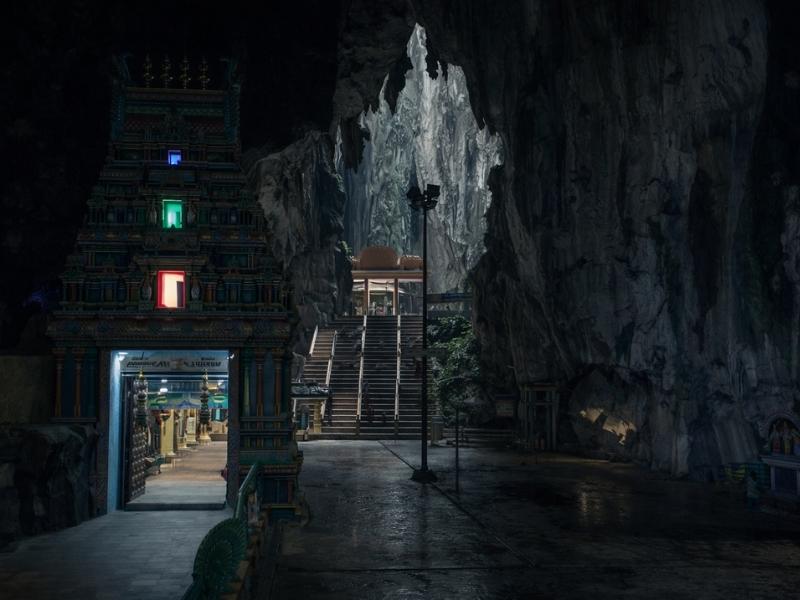
No. There are no advance tickets for Batu Caves. The Temple Cave has no booking system, no timed entry, and no queue to skip. You arrive and enter. The “Batu Caves tickets” sold on platforms like Klook, GetYourGuide, and Viator are tour packages – they include transport, a guide, and sometimes other KL attractions. They are worth considering for the guide and logistics, not because they give you any access that walking up independently doesn’t already provide.
This is one of the most consistently misleading aspects of the Batu Caves online information landscape. Search “Batu Caves tickets” and the first results are aggregator platforms selling packages starting from RM 40-150. These pages use language like “reserve your spot” and “secure your entry,” which implies scarcity and advance booking are necessary. Neither is true for independent visitors.
What the tour packages actually include: typically a return transfer from a central KL hotel, a local guide for 45-90 minutes on-site, and sometimes additional KL stops (Thean Hou Temple, Batik Factory, National Mosque). For visitors who want transport handled, cultural context provided, and other attractions combined, a half-day tour from RM 80-150 is reasonable value. The guide element specifically adds real value – the Temple Cave contains active shrines, mythological art, and living ritual that is considerably more meaningful with explanation than without.
For the completely independent visitor: arrive at KL Sentral, take the KTM Komuter (30 minutes, RM 2.60), walk 80 metres to the entrance, climb the stairs. Zero booking required. The only cash you need before you leave the hotel is your KTM card balance and whatever you plan to spend on-site.
Want to make sure your Batu Caves visit is worth the trip out of the city? Here’s our how to visit Batu Caves tours guide so you get the most out of it.
Is Batu Caves Free During Thaipusam?
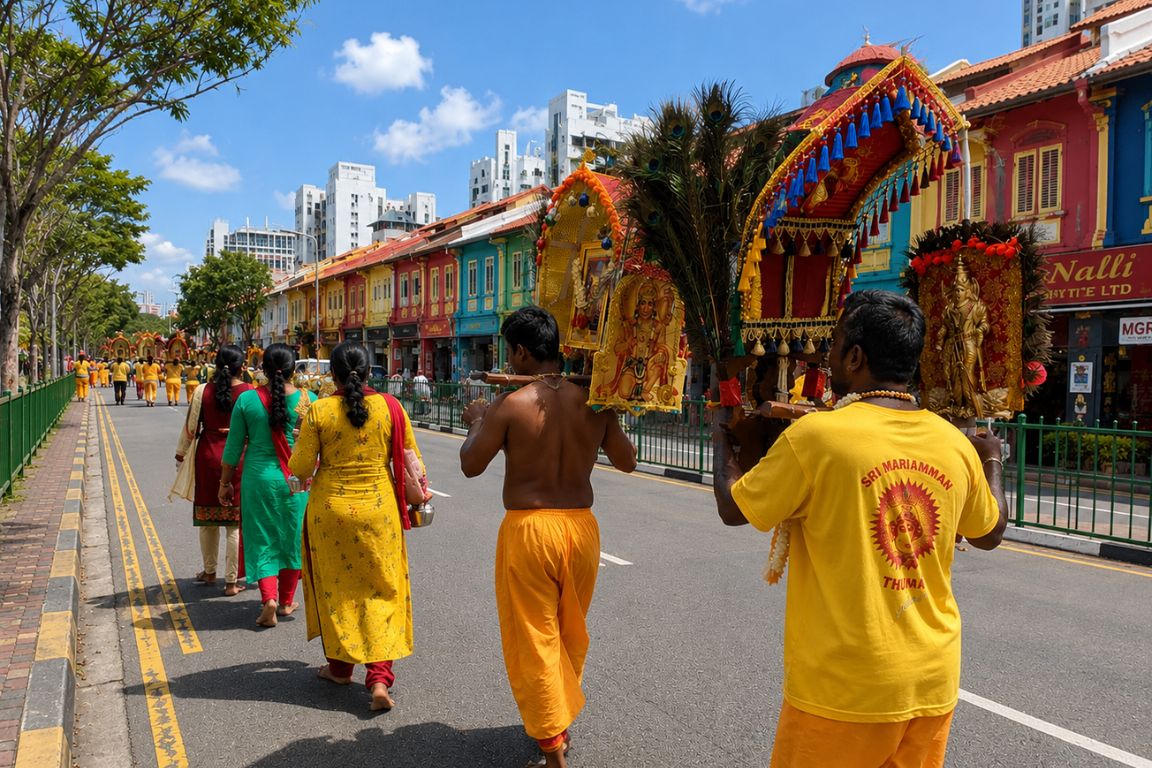 Yes. Entry to the Temple Cave remains completely free during Thaipusam. There are no additional festival entry fees, no crowd management charges, and no timed entry requirements. The Ramayana Cave (RM 5) and Cave Villa (RM 15) maintain their standard pricing. The KTM train runs free on the main festival day – February 1, 2026 – providing free transport to and from the site on top of the free cave entry.
The temple has never charged entry and does not introduce fees for high-attendance days. Thaipusam draws over 3.5 million visitors across its four-day period and the site absorbs that number without monetising crowd access. Donations become more significant during Thaipusam – the temple’s operating and festival costs are substantial – and the donation boxes are prominently placed throughout the complex. Giving during Thaipusam if you’ve attended as a non-devotee is an appropriate acknowledgement of the welcome extended.
The free KTM service during Thaipusam is worth knowing because it affects your total visit cost. In 2026, the government funded 24-hour free KTM service from January 31st through February 1st, covering the cost of approximately 700,000 train journeys. Combined with the free cave entry, a Thaipusam visit from central KL can cost genuinely nothing beyond food and any voluntary donations – making it one of the most accessible large-scale cultural events in Southeast Asia.
Want to experience Thaipusam at Batu Caves without being completely overwhelmed by the scale of it? Here’s our visiting Batu Caves tours during Thaipusam guide so you arrive prepared.
How Much Should You Budget For A Full Batu Caves Visit?
Tap a column heading to sort.
 A solo budget visitor spending nothing beyond transport can visit for RM 5.20 return train fare. A visitor who adds the Ramayana Cave, a sarong, food, and a donation spends around RM 35-50. A family of four covering all the same costs, including Cave Villa, budgets RM 100-150. A half-day guided tour from KL, including transport, costs RM 80-150 per person depending on operator. All costs are cash-only on-site.
The budget breakdown depends almost entirely on two decisions: whether you’re coming dressed correctly, and whether you’re visiting additional caves beyond the Temple Cave. Both are in your control.
| KTM train (KL Sentral, return) | RM 5.20 | Touch ‘n Go card rate; free during Thaipusam |
| Temple Cave entry | Free | No ticket required |
| Sarong (if needed) | RM 15 | Avoidable by dressing correctly before arrival |
| Ramayana Cave | RM 5 | Recommended – 20-30 min, worth the cost |
| Cave Villa | RM 15 (foreigner) / RM 7 (Malaysian) | Optional; caged animals on-site |
| Public toilets | RM 0.50-2 | No toilet paper provided; bring tissues |
| Food and drinks on-site | RM 5-15 per person | All vegetarian; good quality banana leaf rice and snacks |
| Temple donation (voluntary) | RM 5-50 | Genuinely appreciated; supports temple maintenance |
| Parking (by car) | RM 3 per vehicle | Cash only; spaces fill quickly from 9 AM on weekends |
| Grab (from central KL) | RM 20-30 each way | Alternative to KTM for groups or early arrivals |
| Total (budget solo – train, Temple Cave, no extras) | RM 5.20 | Absolute minimum, dressed correctly, no additional caves |
| Total (typical solo visit – train, Ramayana, food, donation) | ~RM 35-50 | Dressed correctly; includes RM 5 Ramayana, food, donation |
| Total (family of 4 – train, all caves, food) | ~RM 100-150 | Includes Ramayana x4 (RM 20), Cave Villa x4 (RM 60), food |
All prices verified May 2026. All on-site transactions are cash-only.
The most important practical takeaway from this table: bring cash. Card payments are not accepted anywhere in the Batu Caves complex – not at the cave entries, not at the sarong counter, not at the food stalls, not at the toilets. ATMs are available at the train station and in the commercial area near the base, but having RM 50-100 in small notes before you arrive is considerably more convenient.
What Our Visitors Actually Spend At Batu Caves: 2025 Data
| Spending Observation | From Our Guided Groups (2025) |
|---|---|
| Needed to buy a sarong on arrival (unplanned RM 15 spend) | 38% of travelers |
| Visited the Ramayana Cave in addition to the Temple Cave | 45% of groups |
| Made a voluntary donation at the Temple Cave shrines | 52% of travelers |
| Purchased food or drinks from vendors inside the complex | 68% of groups |
| Arrived with no cash and encountered difficulty (sarong or toilets) | 32% of travelers |
| Total travelers guided through Batu Caves since founding | 6,500+ (active since 2015) |
Frequently Asked Questions
Is Batu Caves free to enter?
Yes. The Temple Cave, the 272-step staircase, the Lord Murugan statue, and the entire forecourt are free with no booking required. Optional paid attractions within the complex are the Ramayana Cave (RM 5) and Cave Villa (RM 15 foreigners / RM 7 Malaysians). Prices verified May 2026.
Do I need to buy Batu Caves tickets in advance?
No. There is no advance ticket system for Batu Caves. The “Batu Caves tickets” sold on platforms like Klook and GetYourGuide are tour packages – transport, guide, and sometimes other KL attractions. They don’t give you any access that walking up independently doesn’t already provide for free.
How much does the Ramayana Cave cost?
RM 5 per person for all visitors. Open 9:00 AM to 6:00 PM daily. Cash only. Worth the cost, it’s quieter than the Temple Cave, takes 20-30 minutes, and tells the Ramayana story through illuminated dioramas with English narrative panels. Prices verified May 2026.
How much does Cave Villa cost at Batu Caves?
RM 15 for foreigners, RM 7 for Malaysian citizens with MyKad. Open 8:30 AM to 5:30 PM. The cave contains Hindu art and two smaller galleries but also houses caged animals, which isn’t disclosed at the ticket counter. Prices verified May 2026.
What hidden costs should I know about at Batu Caves?
The main surprises are the sarong purchase (RM 15 if underdressed), public toilets (RM 0.50-2), parking by car (RM 3), and food/drinks from vendors (RM 5-15 per person). All on-site transactions are cash-only. Voluntary temple donations are appreciated but never required. Bring RM 50-100 in small notes.
Is Batu Caves free during Thaipusam?
Yes. Entry remains completely free during Thaipusam. The KTM train also ran free on the main festival day (February 1, 2026) as a government subsidy. There are no crowd management fees or additional charges during the festival period.
Choose Your Batu Caves Day
Private Batu Caves & KL Cultural Tour. A private vehicle connects Batu Caves, Thean Hou Temple and the National Mosque, with independent time at the stops. Have a date in mind? Check it before arranging the rest of your KL day.
4 hours. English-speaking driver/guide. KL city hotel pickup and return; airport and Port Klang pickup cost extra. Food is extra. Mosque interior unavailable on Fridays. The Temple Cave requires stairs; this is not an accessible or festival-specific tour.
Choose a date to see scheduled departures. Final availability and price are confirmed on Viator.
No verified tour fits those requirements. Adjust your choices, or keep the independent plan described above. A festival, accessible route or another endpoint needs a separately confirmed service.
Compare Options And Fit Your Plans
General recommendations until you choose. English driver guidance does not promise an escort on the staircase. Confirm the exact pickup, child arrangements and site time on the listing.
- Private Batu Caves & KL Cultural Tour: 4 hours. A private vehicle connects Batu Caves, Thean Hou Temple and the National Mosque, with independent time at the stops. English-speaking driver/guide. KL city hotel pickup and return; airport and Port Klang pickup cost extra. Food is extra. Mosque interior unavailable on Fridays. The Temple Cave requires stairs; this is not an accessible or festival-specific tour.
- Batu Caves, Ramayana & Kanching Falls: 5 hours. Combine the Temple Cave with the Ramayana Cave story scenes and a Kanching waterfall stop. Five hours. English-speaking driver-assisted tour. Ramayana and Kanching admission included. Pickup depends on option. Not suitable for pregnancy or mobility impairments; child eligibility must be confirmed on the listing. Food and personal expenses are extra.