What to See at Batu Caves
See Batu Caves’ giant golden Murugan statue, rainbow stairs, massive Temple Cave, monkeys, bats, and the Ramayana Cave most tourists skip.
The independent visit described here remains an option. A paid tour adds transport and a planned route.
Last updated: May 16, 2026
Quick Reference: What’s At Batu Caves
Tap a column heading to sort.
| Lord Murugan Statue | Base of staircase | Free | Morning light on the gold surface; best before 9 AM |
| 272 Rainbow Staircase | Leads to Temple Cave | Free | View back over forecourt from ~step 180 |
| Temple Cave (Cathedral Cave) | Top of staircase | Free | 100m ceiling; early morning sunlight through rock gaps |
| Ramayana Cave | Ground level, left of stairs | RM 5 – Prices verified May 2026 | 15m Hanuman statue at entrance; narrative dioramas inside |
| Ground-level Hindu temples | Forecourt area | Free (donations welcomed) | Morning puja rituals; remove shoes before entering |
| Wildlife (macaques, bats, swiftlets) | Throughout complex | Free | Bats visible at dusk near cave openings; birds swooping inside cave |
| Dark Cave | Midpoint of staircase | RM 35 adult (when open) | Closed since 2019 – no confirmed reopening date |
What Is The First Thing You See When You Arrive At Batu Caves?
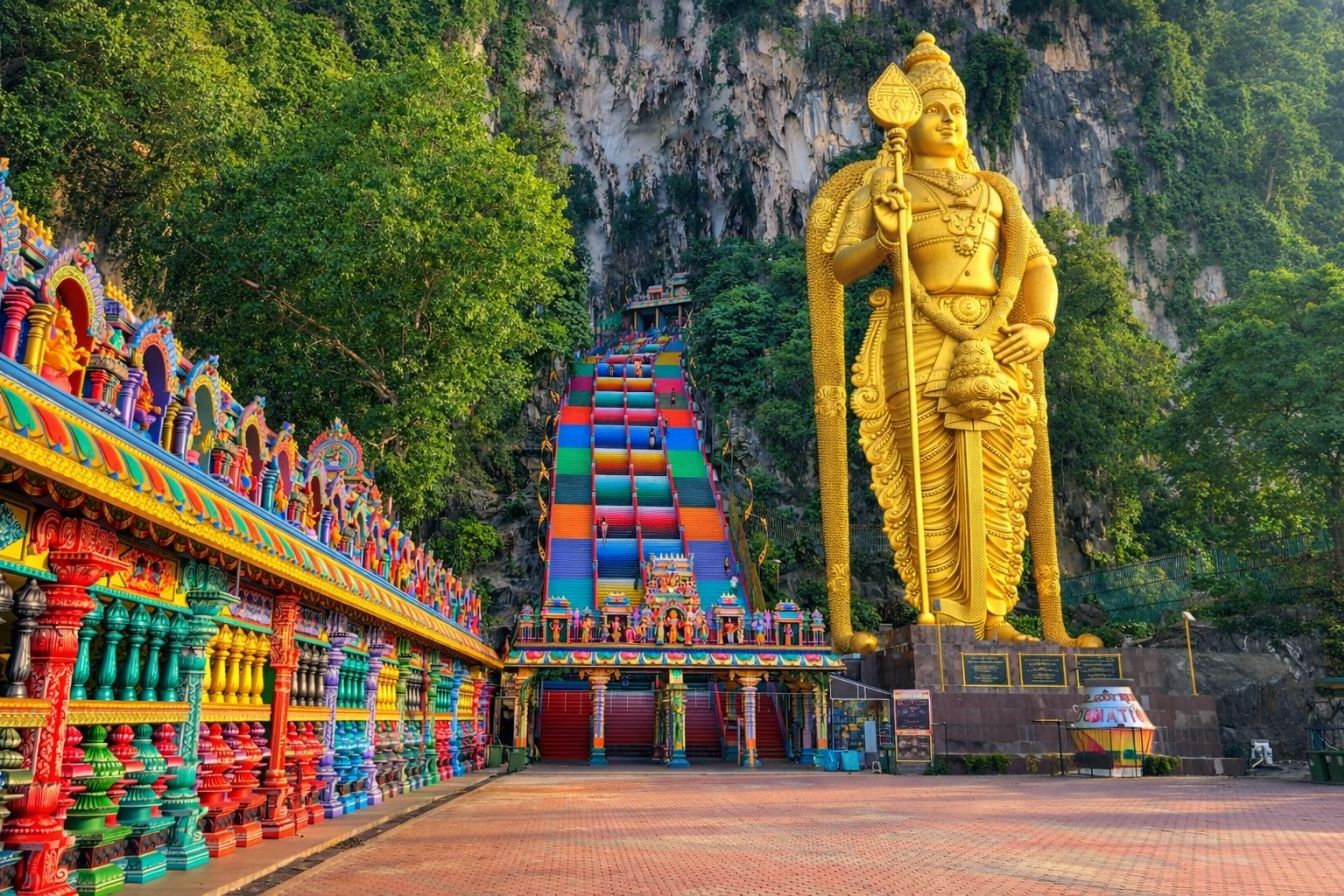 The Lord Murugan statue. Standing 42.7 metres tall, it is the tallest statue in Malaysia and the second tallest Murugan statue in the world. It was built over three years using 350 tonnes of steel, 1,550 cubic metres of concrete, and 300 litres of gold paint imported from Thailand, and unveiled at Thaipusam in January 2006. Nothing in the approach prepares you for the scale of it in person.
You see it before you even exit the train station. A flash of gold above the roofline. Then you round the corner and the whole thing reveals itself at once: a figure in ceremonial dress and jewelled crown, one hand raised holding a divine spear, gaze fixed somewhere past the crowd and the city toward something you can’t quite identify. At that height, the statue reads almost surreal, the way the genuinely massive sometimes does until your eyes recalibrate.
Lord Murugan is the Hindu god of war and victory, revered above all others at this site. The shape of the main cave opening above was said to resemble his vel, the divine spear, and that resemblance was why Tamil trader K. Thamboosamy Pillay chose this cave in 1890 to build the first temple. The statue came 116 years later but it has become the defining image of the place, the thing every visitor photographs from below and the thing that makes Batu Caves identifiable from a kilometre away.
One detail worth knowing: a restoration project that began in mid-2023 has been refreshing the gold paint and structural repairs through 2025. The site stays open throughout. In early morning the surface catches the sun at an angle that makes it blaze. At noon the glare is intense enough that some visitors reach for sunglasses to look at it directly. Both are the same statue. The light changes everything.
What Is Inside The Temple Cave At Batu Caves?
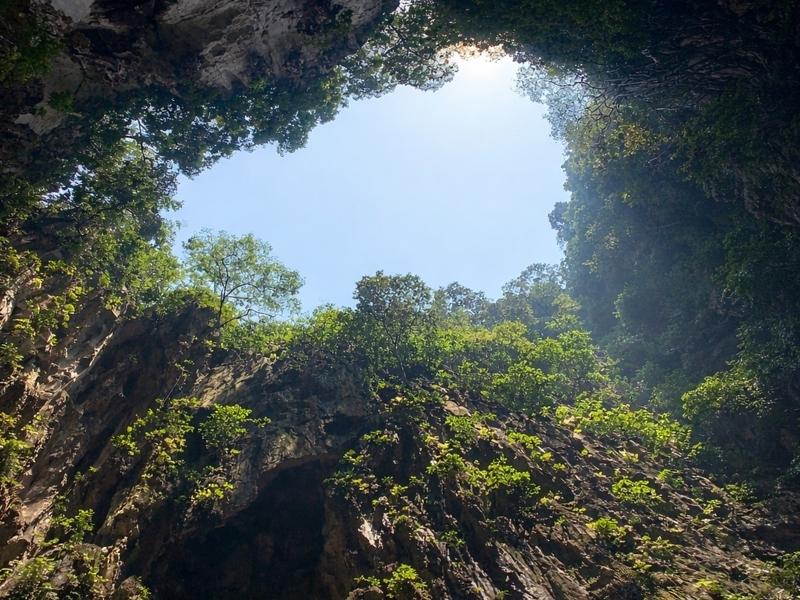
The Temple Cave (also called Cathedral Cave) is a vast limestone chamber with a ceiling that peaks at around 100 metres, letting in natural light through multiple openings in the rock. Inside are several active Hindu shrines dedicated to Lord Murugan and other deities, including the Sri Valli Deivanai Temple dedicated to Murugan’s consort. Priests conduct daily rituals. The cave floor is uneven, often wet, and the air is cool compared to the staircase outside.
Most visitors don’t expect the scale. The staircase gives you no sense of what’s at the top. You reach the 272nd step and the cave opens around you and the ceiling goes up and up, further than any interior space you’ve likely stood in. Stalactites hang from rock you can barely see in the upper dark. Columns of light drop through ceiling gaps. The air changes – cooler, damper, with incense threaded through it from the shrine areas deeper in the chamber.
There are two main shrine areas. The first, dedicated to Lord Murugan, sits toward the cave’s centre and is the most active, with devotees approaching to receive blessings from the priest – a dot of vibhuti ash on the forehead, or a blessing with a flame. The second, smaller shrine dedicated to Murugan’s consort Sri Valli Deivanai, sits further in toward a secondary chamber reached by a short inner staircase. That second area is where the cave opens to another natural ceiling gap and you get a view of the jungle pressing in at the rock edges above.
The walls hold additional shrines and painted panels depicting stories from Hindu mythology. Most relate to Lord Murugan’s battles against the demon Soorapadman, scenes that appear in Thaipusam iconography throughout the year but come alive with devotional energy during the festival itself. You don’t need to know the mythology to feel the weight of the space. But knowing it changes what you see.
What Can You See At The Ramayana Cave?
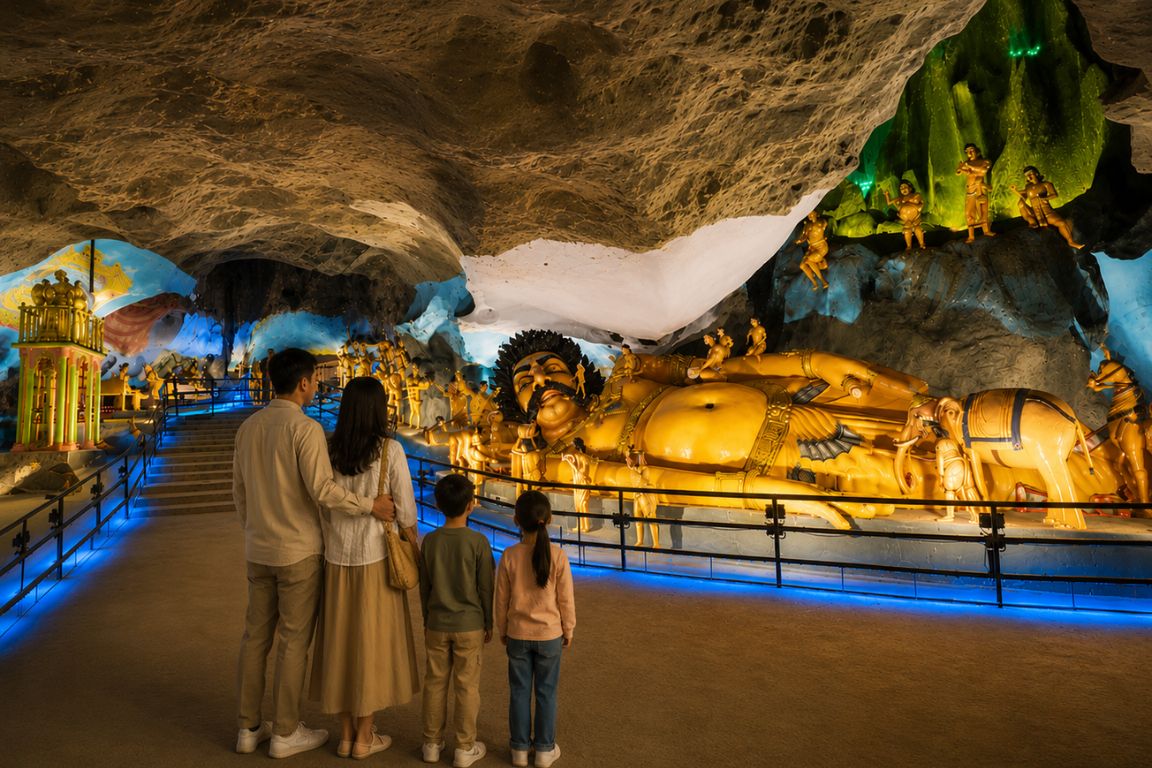 The Ramayana Cave sits at ground level to the left of the main staircase. Its entrance is marked by a 15-metre statue of Hanuman, the monkey deity from the Hindu epic Ramayana. Inside, the cave walls are lined with illuminated dioramas telling the story of Lord Rama from beginning to end, with narrative panels in English. Entry costs RM 5 and takes 20-30 minutes. It’s quieter than the Temple Cave above and undervisited relative to its quality.
The Hanuman statue at the entrance is itself worth stopping for. Green-painted, three storeys high, holding a mace – it’s one of the most striking things at ground level and easily overlooked because most eyes go straight to the golden Murugan statue across the way. Hanuman, devoted companion and hero of the Ramayana, is also a symbol of strength and loyalty in Hindu tradition. The temple behind the statue was consecrated in November 2001.
Inside the cave, the ceiling is lower than the Temple Cave above, and the atmosphere is different. Quieter. The LED-lit dioramas run along the cave walls in narrative sequence, depicting the key events of the Ramayana: Rama’s exile, the abduction of Sita by the demon Ravana, Hanuman’s role in finding her, the battle, the rescue. Western visitors sometimes find the aesthetic unusual – brightly painted sculptural scenes rather than representational art, but it’s exactly the tradition. Hindu sacred storytelling has always worked in vivid colour and direct narrative form.
The cave continues to be added to over time. If you visited some years ago, new dioramas may have been installed since. It’s genuinely worth RM 5 for the peace alone, let alone the content.
Want to know exactly what you’re paying for before you show up at the base of those stairs? Here’s our Batu Caves entry fee guide so you arrive with the right amount of cash or card.
What Is The Dark Cave At Batu Caves?
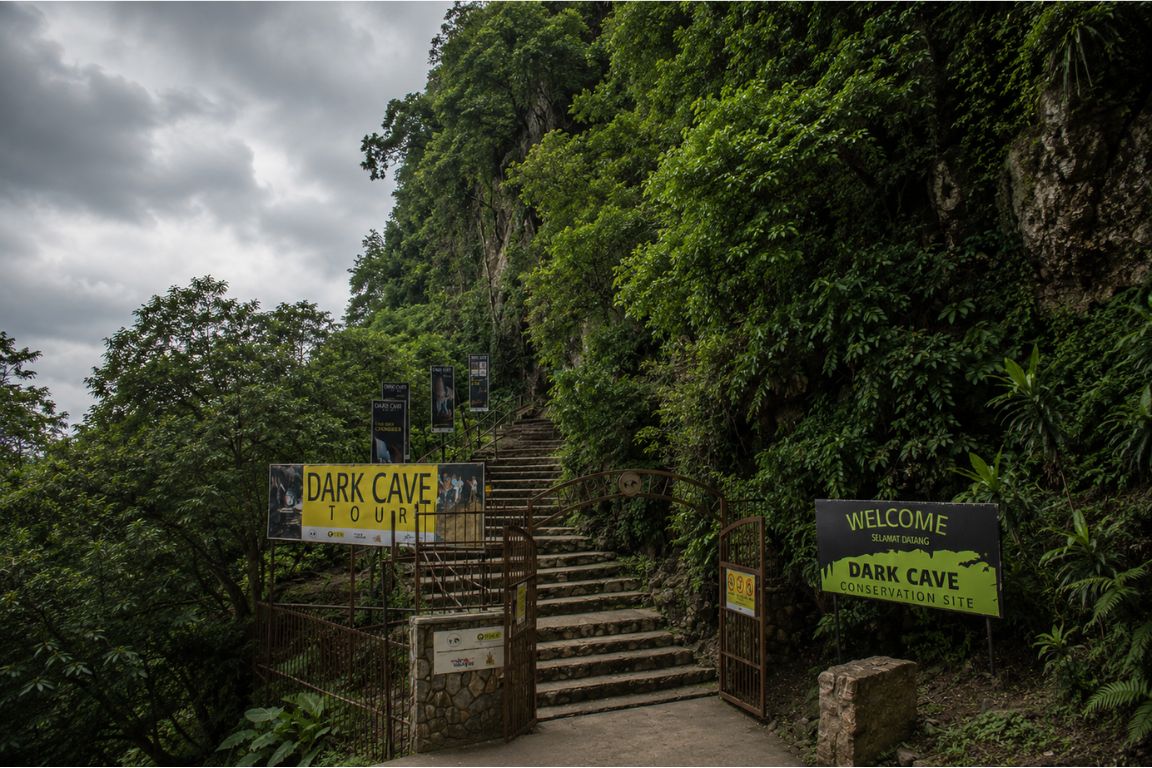 The Dark Cave is a protected nature reserve inside the limestone hill, accessible from around step 204 of the main staircase. It contains over 2 kilometres of mapped passages and is home to 21 bat species, the endemic trapdoor spider Liphistius batuensis (found nowhere else on earth), and an ecosystem entirely dependent on bat guano as its energy source. Guided tours ran at RM 35 per adult before the cave was closed. It has been shut since 2019 with no confirmed reopening date.
The Dark Cave is the scientific heart of Batu Caves, and for most visitors it’s invisible. You pass the entrance on the staircase and don’t know what’s behind the closed gate. What’s behind it is something genuinely rare: a self-contained cave ecosystem more comprehensively studied than almost any other cave in Southeast Asia, with research records going back to the 1880s.
Its defining resident is Liphistius batuensis, a trapdoor spider found in this cave and no other place on the planet. The cave also supports 21 bat species, countless invertebrates, cave cockroaches, and a food web that runs entirely on guano from the bat colonies roosting in the upper passages. When the Dark Cave ran guided tours, they were consistently cited as among the most memorable things to do at Batu Caves. The 45-minute educational tour used helmets and torches and required a guide; the adventure tour ran three to four hours.
The closure stems from safety and conservation concerns rather than disinterest in reopening it. The Malaysian Nature Society, which manages the cave, has been involved in discussions about a responsible reopening. The Visit Selangor Year 2026 initiative included conversations about the Dark Cave, but no official date has been confirmed. Check darkcavemalaysia.com for the latest before visiting.
Batu Caves Attractions Compared
| Attraction | Time Needed | Physical Effort | Best For | Skip If |
|---|---|---|---|---|
| Lord Murugan Statue | 10-15 min | None | Everyone – the defining image of the site | Never |
| 272-Step Staircase + Temple Cave | 45-75 min | Moderate | Anyone reasonably fit; central experience of the site | Mobility limitations |
| Ramayana Cave | 20-30 min | None | Hindu mythology interest; quieter atmosphere; families | Very limited time only |
| Ground-level temples | 15-20 min | None | Early arrivals wanting to see active morning ritual | Those arriving after 10 AM (activity quietens) |
| Dark Cave | 45 min – 4 hrs | Low-moderate | Nature and science enthusiasts | Currently closed – check status before visiting |
| Cave Villa | 30 min | None | Optional – Hindu art and statues; privately owned | Visitors uncomfortable with caged animals on-site |
What Are The Hindu Temples And Shrines Around The Batu Caves Complex?
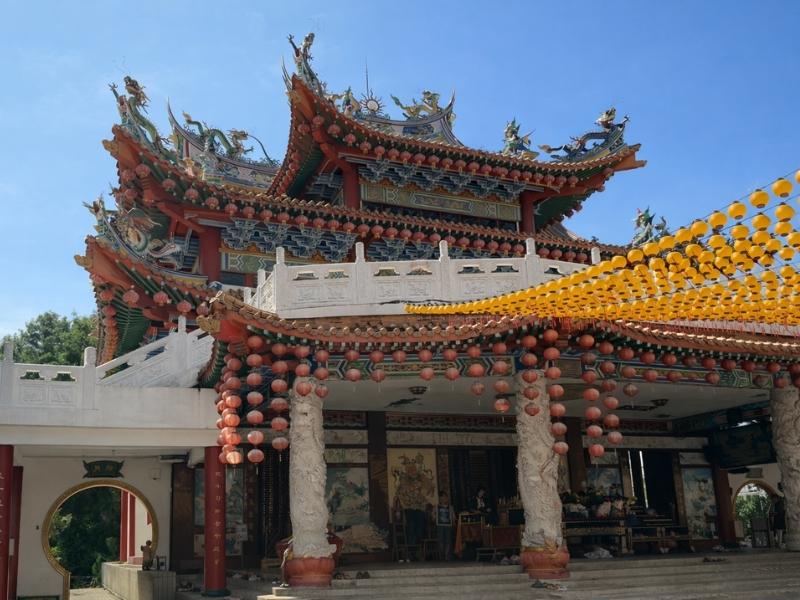
Before you reach the staircase, the forecourt area contains several smaller Hindu temples that most visitors walk past without stopping. These are active places of daily worship. Morning puja (prayer) rituals happen here from around 7:00 AM, with incense, flowers, chanting, and offerings. The ornate temple buildings lining the forecourt have elaborately carved facades depicting Hindu deities, and the rooflines are covered in painted statuary. Shoes off before entering. No ticket required.
This is the part of Batu Caves that guidebooks consistently underexplain. The staircase and the golden statue command all the attention, but the religious life of this place happens largely at ground level, in small temple structures that have been running daily rituals for over a century. Walk slowly through the forecourt and you’ll hear it before you see it: a bell, a chant, the smell of incense drifting from a doorway.
The facades of these buildings reward close attention. Every surface is occupied, carved or painted with figures from Hindu mythology – gods, demons, devotees, peacocks (Murugan’s mount), celestial beings with multiple arms. It’s an entire theological world rendered in architectural detail, and most visitors pass it at a walk on their way to the stairs. Slow down. Look up at the rooflines. The detail is extraordinary.
The visit to these spaces requires nothing except respect and bare feet when crossing a threshold. No ticket, no queue. On weekday mornings especially, you may find yourself the only non-worshipper present, which is a different experience entirely from the crowded staircase twenty metres away.
What Wildlife Can You See At Batu Caves?
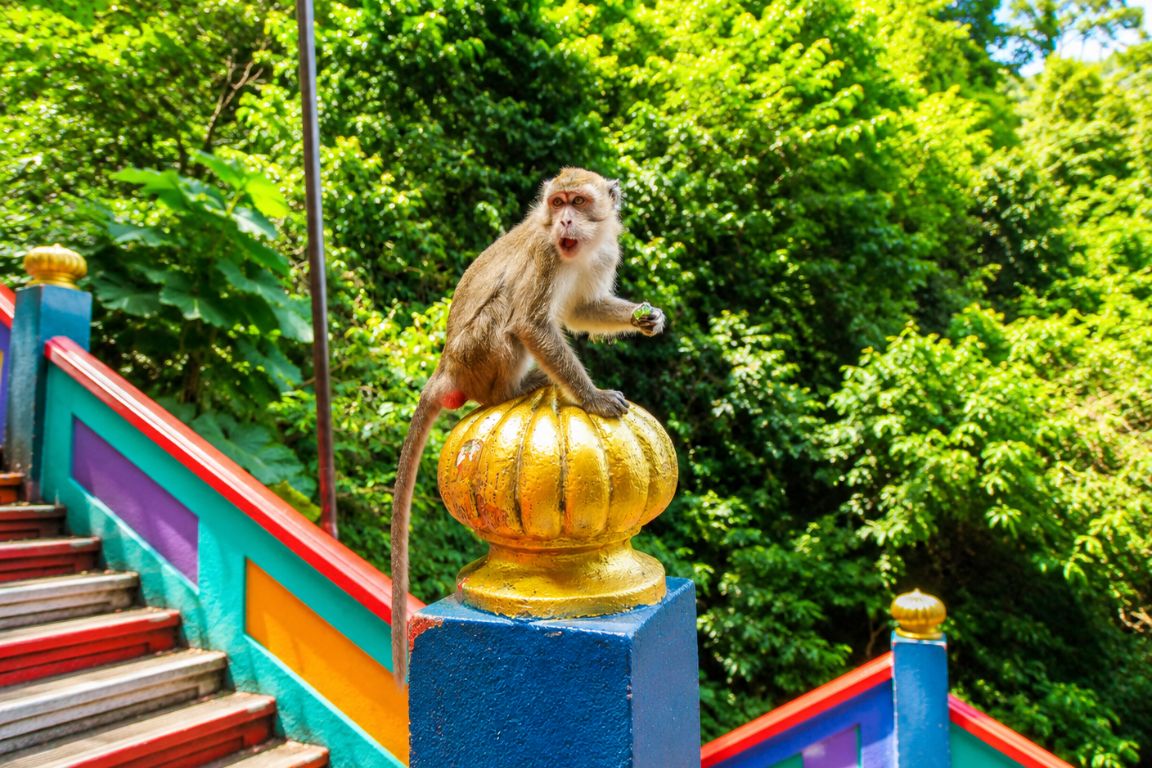 Batu Caves is a genuine biodiversity hotspot inside an urban environment. The most visible wildlife is the long-tailed macaques on the staircase. Inside and above the caves, 21 species of bats roost in the cave system, and swiftlets can be seen circling inside the Temple Cave. The Dark Cave houses Liphistius batuensis, a trapdoor spider found nowhere else on earth. The limestone hill supports 269 species of vascular plants. It is not just a temple site, it is also a functioning fragment of Malaysian wildlife habitat.
Most visitors experience the wildlife through the monkeys and nothing else. That’s partly because the richer ecological picture is invisible from the main path. The bats live in upper cave passages where few humans go. The trapdoor spider lives in the dark. But look up inside the Temple Cave and you’ll see swiftlets sweeping through the cavern, catching insects in steep banking turns that use the cave walls the way swallows use barn rafters. Their calls echo off 100 metres of limestone. It’s easy to miss if you’re focused on the shrines.
The bats are more of an evening spectacle. Around dusk, colonies emerge from cave openings and disperse into the surrounding area to feed – a flow of small dark shapes against the sky that researchers have been studying since the 1880s. The cave nectar bat Eonycteris spelaea, one of the species recorded at Batu Caves, is known to feed on at least 55 plant species and plays a significant pollination role in the region. The species decline in the cave system in recent decades, documented in research comparing historical records to 2019 surveys, reflects the pressure of urban development surrounding this limestone island.
On the macaques: they are long-tailed macaques, Macaca fascicularis, and they have lived on this limestone hill far longer than the temple. They are not pets, not performers, not domesticated. They are wild animals who have learned that humans bring food and that tourists are inattentive. Watch them from a distance and they are genuinely fascinating. Watch a juvenile learn to use the staircase railing like a highway. Watch a mother carry her infant up the limestone wall beside the stairs without apparent effort. The moment you have food visible, they become something else entirely.
Want to navigate the Batu Caves monkey situation without losing your snacks, sunglasses, or dignity on the staircase? Here’s our monkeys at Batu Caves tours guide so you handle it properly.
What Does The 272-Step Staircase Actually Look Like?
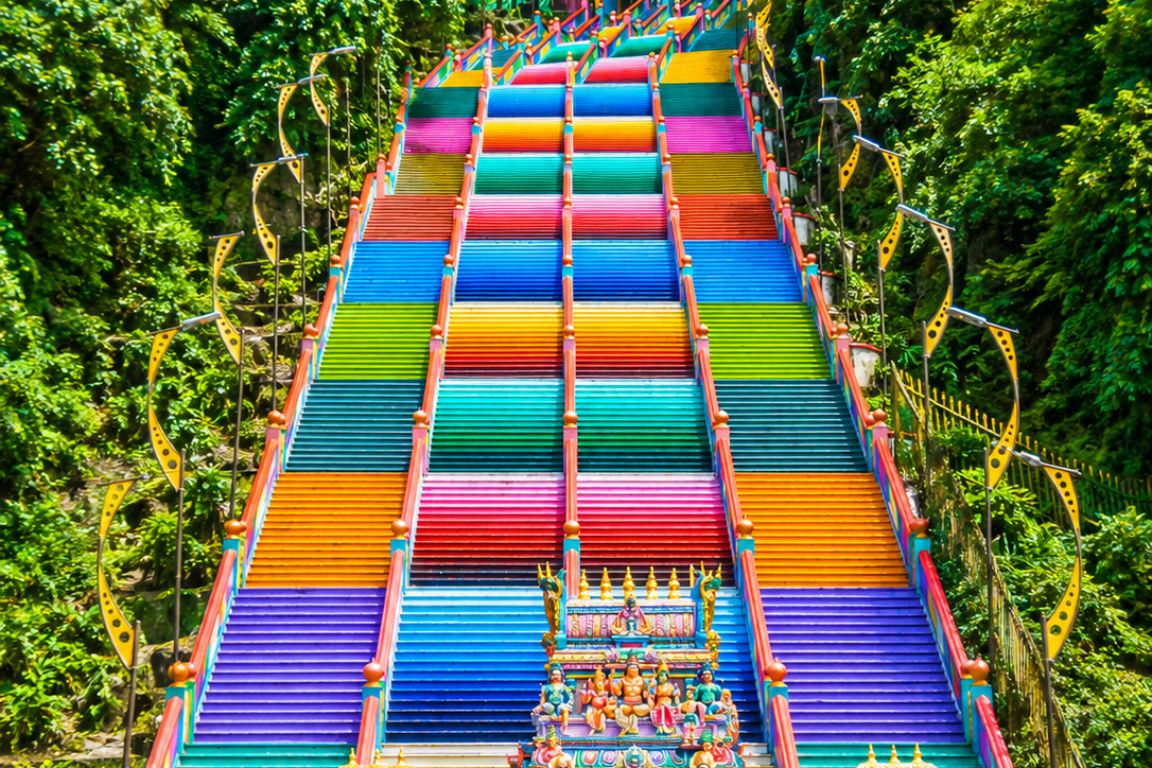 The staircase is painted in vivid blocks of colour – red, blue, yellow, green, orange – applied in sections during a renovation in 2018. It runs steeply up the face of the limestone cliff, wide enough for two-way traffic, with metal railings on each side. At the base, the Lord Murugan statue stands to the right. At the top, the cave entrance opens above. From around step 180, looking back down, the forecourt and golden statue appear in a frame of rock and sky that most visitors miss because they’re focused on the next step up.
The rainbow paint was an improvised decision. In August 2018, the temple was undergoing a kumbhabhishekam, the Hindu consecration ritual performed every 12 years. There was surplus paint. About 100 volunteers painted the stairs over two and a half days. The result went viral immediately on social media, tripling the site’s Instagram presence almost overnight.
It was also contested. The National Heritage Department noted the work was done without heritage approval, raising questions about whether modifying a heritage-listed site required formal permits. The paint stayed. The controversy faded. The rainbow staircase is now so deeply associated with the site that it’s effectively impossible to imagine Batu Caves without it.
What the photos don’t show is the feel of the climb. The first eighty steps are steady. The angle is steep but manageable, the colours bright in the morning light, monkeys beginning to appear on the railings. Around step 120 the sun finds the stairs and the heat intensifies. By step 200 the cave entrance is visible above, still further than it looks. The last stretch curves slightly and opens into the cave mouth. You don’t just walk in; you emerge from outside into a sudden cool dark, and then your eyes adjust and the cave ceiling rises above you and everything changes.
Coming down is when most people stop for the view. Stand on the upper landing and look back: the staircase drops away in colour below, the golden statue is now visible at shoulder height on the right, and behind it the city of Kuala Lumpur flattens out in all directions. It’s an unusual view. Not many cities look like this from a limestone cliff.
Not sure what 272 steps actually feels like in Malaysian heat and humidity before you commit to the climb? Here’s our Batu Caves stairs guide so you know exactly what you’re getting into.
What Can You See At Batu Caves During Thaipusam?
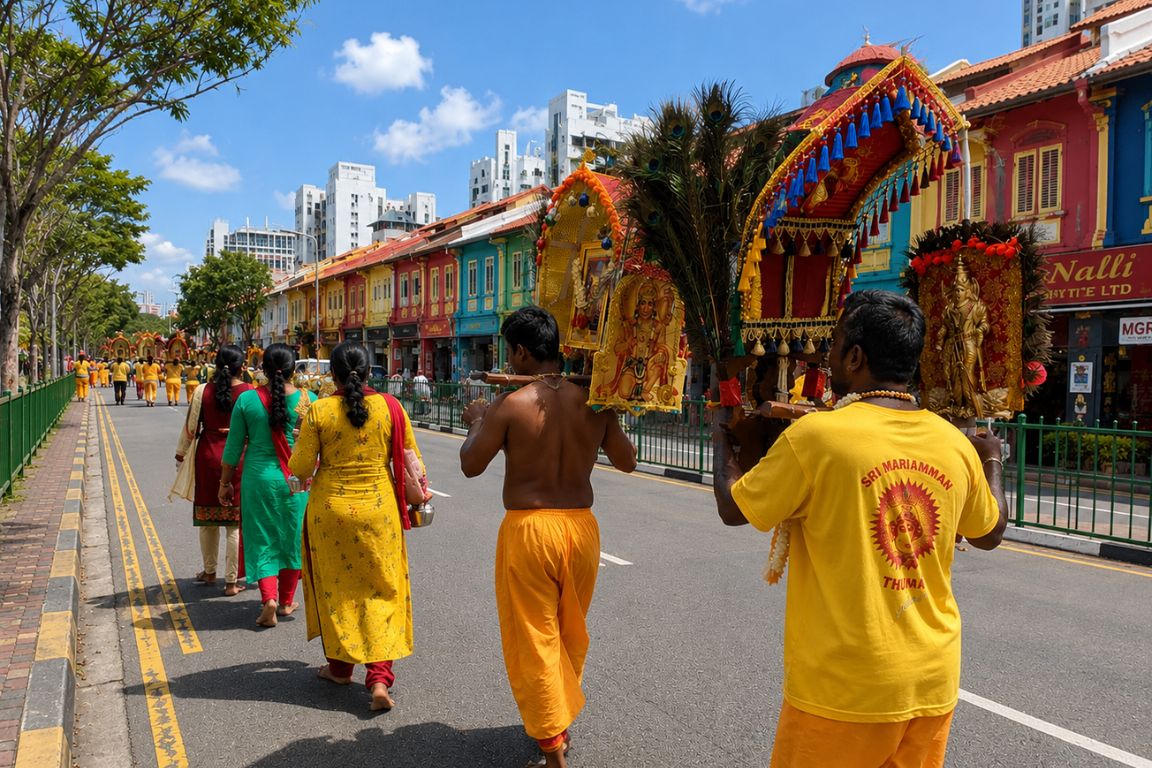 During Thaipusam, everything you see at Batu Caves changes. The staircase fills with a continuous stream of devotees in saffron and white, many barefoot, many carrying kavadis – ceremonial structures, some supported by skewers pierced through the skin. The forecourt fills with tents, vendors, and volunteer food stations. The cave above holds thousands simultaneously. In 2026, Thaipusam falls on February 1st, with over 3.5 million visitors expected across the festival period.
The visual centrepiece of Thaipusam is the kavadi. In its simplest form, a kavadi is a pole balanced across the shoulders bearing offerings of milk. In its most elaborate form, it is a towering metal structure decorated with peacock feathers, flowers, and images of Lord Murugan, attached to the devotee’s body through multiple skewers piercing the skin of the chest and back. Vibuthi, sacred ash, is applied at the piercing sites. Drumming and chanting support the devotee into a state of trance.
It is not theatrical. The devotees who carry vel kavadis have fasted and prayed for 48 days beforehand. The experience they are having is intensely spiritual. Most are fulfilling a vow made to Lord Murugan, a promise of penance in exchange for a blessing received. Some have been carrying kavadis at Thaipusam since they were children, continuing a family tradition that runs across generations.
For visitors attending as observers, the most powerful moments are often the smallest ones. A family grouped around a devotee preparing to begin the climb. An older priest applying ash with hands that move with the ease of complete familiarity. A child watching something she can’t fully understand yet but will remember. The spectacle is extraordinary, but the devotion underneath it is more interesting.
Practical: arrive before 7:00 AM to climb the staircase with any freedom of movement. After that, crowd flow controls the pace. Wear yellow or orange if you want to fit in with the devotional mood. Take the train – roads around the site are closed and the KTM runs free with extended hours during the festival. Don’t bring a camera that requires two hands to operate unless you can also manage crowds with it. Keep bags zipped.
First time considering a Thaipusam visit to Batu Caves and not sure if the chaos is worth it over a quieter day? Here’s our visiting Batu Caves tours during Thaipusam guide so you make an informed decision before you go.
What Our Travelers Notice Most: 2025 Visitor Data
| Observation | From Our Guided Groups (2025) |
|---|---|
| Said the Temple Cave interior exceeded their expectations | 91% of travelers |
| Had not noticed the swiftlets flying inside the Temple Cave | 72% of travelers |
| Visited the ground-level temples before the staircase | 35% of groups |
| Identified the Ramayana Cave as a highlight of their visit | 48% of travelers |
| Had a monkey interaction (snatch attempt or direct approach) | 64% of travelers |
| Total travelers guided through Batu Caves since founding | 6,500+ (active since 2015) |
Frequently Asked Questions
What is the most famous thing to see at Batu Caves?
The 42.7-metre golden Lord Murugan statue at the base of the site is the defining image of Batu Caves and the first thing visitors see on arrival. The 272 rainbow-coloured staircase and the Temple Cave at the top are the other two landmarks that most people associate with the site.
What is inside the Temple Cave at Batu Caves?
The Temple Cave contains several active Hindu shrines including the main Lord Murugan shrine and the Sri Valli Deivanai Temple dedicated to Murugan’s consort. The cave ceiling reaches around 100 metres at its peak, with natural light entering through gaps in the rock. Stalactites and limestone formations are visible above the shrine areas. Priests conduct daily rituals inside.
Is the Ramayana Cave worth visiting?
Yes. It’s quieter than the Temple Cave, costs RM 5, and takes around 20-30 minutes. The entrance is marked by a striking 15-metre Hanuman statue, and the interior tells the story of the Ramayana through illuminated dioramas with English-language narrative panels. It’s consistently undervisited and consistently memorable for those who make the time.
Can you see the Dark Cave at Batu Caves?
Not currently. The Dark Cave has been closed since 2019 with no confirmed reopening date. When it was open, it offered guided tours of a protected cave ecosystem home to 21 bat species and the endemic trapdoor spider Liphistius batuensis, found nowhere else on earth. Check darkcavemalaysia.com for the latest status.
What wildlife is at Batu Caves?
The site is home to long-tailed macaques on the staircase, 21 bat species in the cave system, swiftlets that fly through the Temple Cave interior, and a range of cave invertebrates in the closed Dark Cave. The limestone hill itself supports 269 species of vascular plants and is considered a biodiversity hotspot within KL’s urban environment.
What can you see at Batu Caves during Thaipusam?
Thaipusam transforms the site entirely. The staircase fills with devotees carrying kavadis, some with body piercings as acts of devotion to Lord Murugan. The forecourt becomes a festival ground with food, vendors, and volunteer stations. Over 3.5 million visitors are expected in 2026, with the main day on February 1st. It is one of the largest Hindu gatherings outside India.
Choose Your Batu Caves Day
Private Batu Caves & KL Cultural Tour. A private vehicle connects Batu Caves, Thean Hou Temple and the National Mosque, with independent time at the stops. Have a date in mind? Check it before arranging the rest of your KL day.
4 hours. English-speaking driver/guide. KL city hotel pickup and return; airport and Port Klang pickup cost extra. Food is extra. Mosque interior unavailable on Fridays. The Temple Cave requires stairs; this is not an accessible or festival-specific tour.
Choose a date to see scheduled departures. Final availability and price are confirmed on Viator.
No verified tour fits those requirements. Adjust your choices, or keep the independent plan described above. A festival, accessible route or another endpoint needs a separately confirmed service.
Compare Options And Fit Your Plans
General recommendations until you choose. English driver guidance does not promise an escort on the staircase. Confirm the exact pickup, child arrangements and site time on the listing.
- Private Batu Caves & KL Cultural Tour: 4 hours. A private vehicle connects Batu Caves, Thean Hou Temple and the National Mosque, with independent time at the stops. English-speaking driver/guide. KL city hotel pickup and return; airport and Port Klang pickup cost extra. Food is extra. Mosque interior unavailable on Fridays. The Temple Cave requires stairs; this is not an accessible or festival-specific tour.
- Batu Caves, Ramayana & Kanching Falls: 5 hours. Combine the Temple Cave with the Ramayana Cave story scenes and a Kanching waterfall stop. Five hours. English-speaking driver-assisted tour. Ramayana and Kanching admission included. Pickup depends on option. Not suitable for pregnancy or mobility impairments; child eligibility must be confirmed on the listing. Food and personal expenses are extra.